Have you ever paused while typing and wondered: “Is it tye or tie?” You’re not alone. Many people search for “tye vs tie” because the words sound the same but look different.
This confusion often happens in emails, school work, or even social media posts. A small spelling mistake can change meaning or make writing look unprofessional.
|See more Feal vs Feel
The truth is simple: one is correct in most cases, and the other is rarely used. But there’s more to know. Understanding why the difference exists helps you avoid mistakes and write with confidence.
In this guide, you’ll get a quick answer, learn the origin of both words, and see how they are used in real life. By the end, you will know exactly which spelling to use every time.
Tye vs Tie – Quick Answer
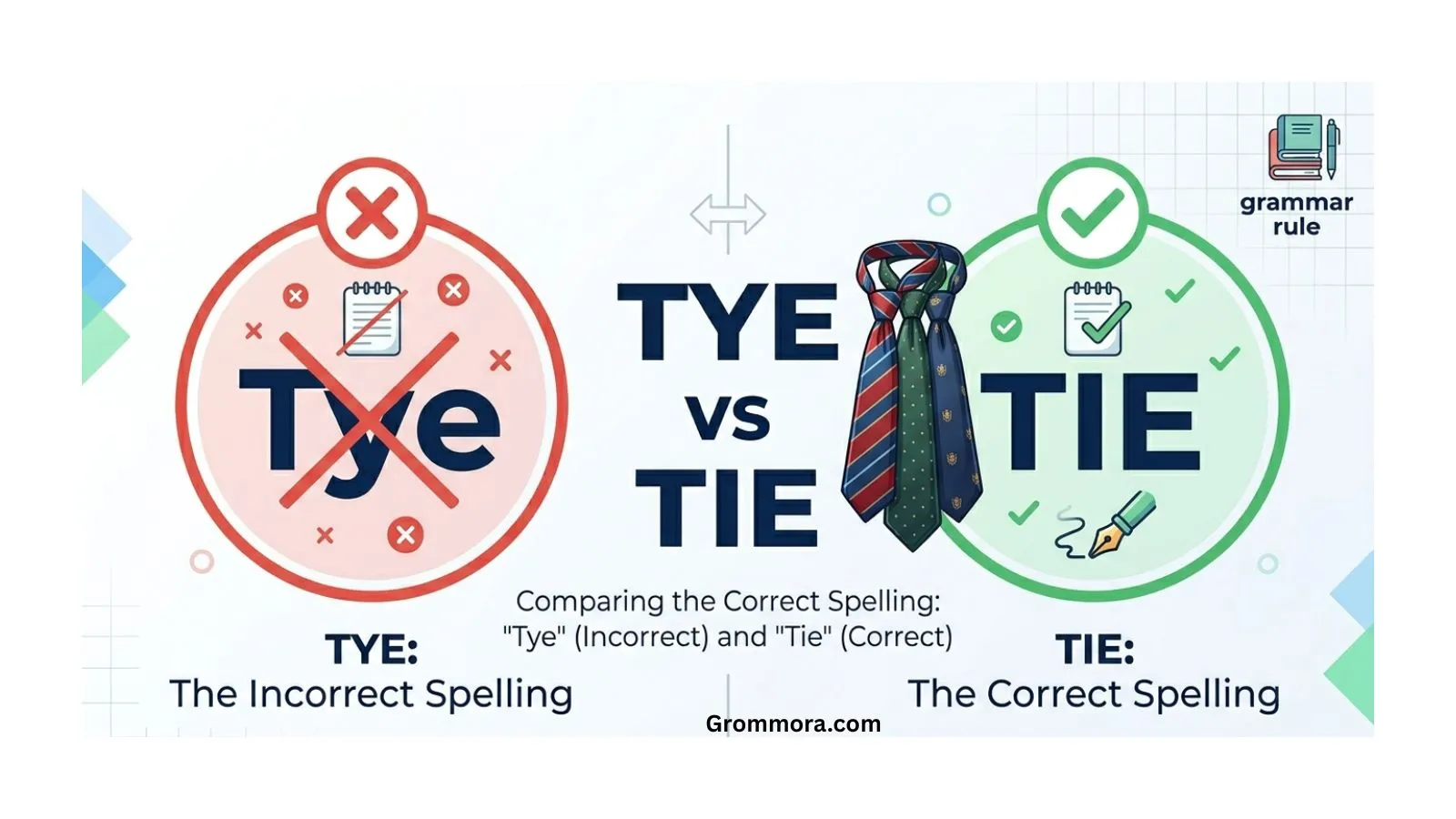
“Tie” is the correct spelling in almost all cases.
- Use tie when talking about:
- Clothing → He wore a blue tie.
- Drawing a knot → Tie your shoes.
- A draw in sports → The match ended in a tie.
“Tye” is rare and usually a name or old spelling.
- Example: Tye is a surname or place name.
👉 Quick rule: If you mean knot, clothing, or draw → use “tie.”
The Origin of Tye vs Tie
The word “tie” comes from Old English tīgan, which means “to bind or fasten.” Over time, it became the standard spelling in modern English.
“Tye” is an old or alternative form. It appears in:
- Old place names
- Family names
- Historical texts
Spelling was not fixed in the past, so words often had many forms. Today, English has settled on “tie” as the correct spelling for common use.
British English vs American English Spelling
Unlike words such as color/colour, “tie” does not change between British and American English. Both use the same spelling.
| Usage Type | British English | American English | Correct Form |
|---|---|---|---|
| Clothing | tie | tie | ✅ tie |
| Knot action | tie | tie | ✅ tie |
| Match result | tie | tie | ✅ tie |
| Alternative form | rarely “tye” | rarely “tye” | ❌ not common |
👉 Important: There is no regional difference here.
Which Spelling Should You Use?
- USA audience: Always use tie
- UK/Commonwealth: Always use tie
- Global writing: Stick with tie
Use “tye” only if:
- It is part of a name
- You are quoting old text
👉 Simple advice: Use “tie” in all normal writing.
Common Mistakes with Tye vs Tie
Incorrect → Please tye your shoes.
✅ Correct → Please tie your shoes.
❌ Incorrect → He wore a red tye.
✅ Correct → He wore a red tie.
❌ Incorrect → The game was a tye.
✅ Correct → The game was a tie.
👉 Tip: If unsure, always choose tie.
Tye vs Tie in Everyday Examples
Emails:
- Please tie the files together before sending.
News:
- The final score ended in a tie.
Social Media:
- New outfit today, love this tie!
Formal Writing:
- The agreement will tie both parties legally.
👉 You’ll notice “tie” is used everywhere.
Tye vs Tie – Google Trends & Usage Data
Search data shows that “tie” is used far more than “tye.”
- “Tie” is popular worldwide
- “Tye” appears mostly in names or rare searches
- Countries like the US, UK, Canada, and Australia all prefer tie
👉 Conclusion: “Tie” dominates modern English usage.
Comparison Table: Tye vs Tie
| Feature | Tie | Tye |
|---|---|---|
| Common usage | Very common | Very rare |
| Meaning | Knot, clothing, draw | Name or old spelling |
| Correct today | ✅ Yes | ❌ Mostly no |
| Used globally | Yes | No |
| Recommended | Always use | Avoid in normal writing |
FAQs
Is it a tye or a tie?
It is “tie”. “Tye” is not used in modern English.
What is the meaning of tye?
“Tye” is an old word or a name, not used in normal English today.
How do you spell tie or tye?
The correct spelling is tie.
Do you wear a tye or tie?
You wear a tie, not “tye.”
Is tye a real word?
Yes, but only as a rare name or old spelling—not for everyday use.
How long is a tye?
“Tye” has no length meaning. It’s not used for measurements.
Conclusion
The difference between tye vs tie is simple once you understand it. “Tie” is the correct and standard spelling used across the world. It covers common meanings like clothing, knots, and equal scores. On the other hand, “tye” is rare and mostly limited to names or old texts.
There is no difference between British and American English here, which makes things even easier. Whether you are writing an email, posting online, or working on a formal document, you can confidently use “tie” every time. Avoid using “tye” unless you are sure it is required.
By following this rule, your writing will look clear, correct, and professional. When in doubt, remember this simple tip: If it sounds like “tie,” it’s almost always spelled “tie.”