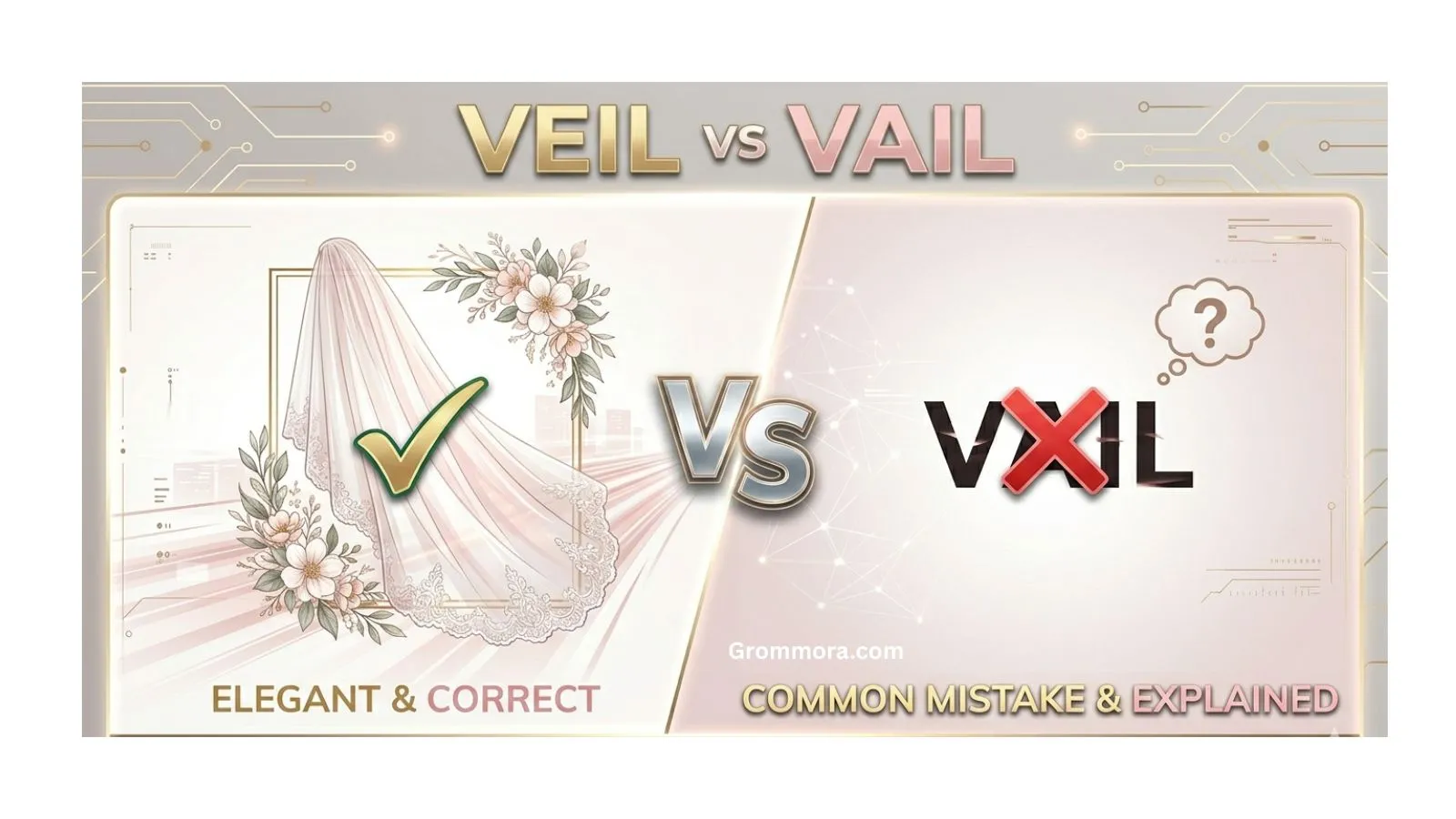
Many people search for “veil or vail” because the two words sound the same but have very different meanings. This creates confusion, especially in writing emails, social media posts, or formal documents.
A small spelling mistake can change your meaning completely. For example, “veil” is often used in fashion, weddings, or to describe hiding something, while “vail” is rare and has a very different use.
|RELATED Mistral vs DeepSeek
This article clears up the confusion in a simple way. You’ll learn the correct spelling, when to use each word, and how to avoid common mistakes. Whether you are a student, writer, or content creator, this guide will help you choose the right word every time.
Veil or Vail – Quick Answer
- Veil = Correct and commonly used word. It means a covering (like a bride’s veil) or something that hides.
- Vail = Rare word. It means to lower or take off (like lowering a flag or hat).
Examples:
- She wore a beautiful veil at her wedding.
- He vailed his cap as a sign of respect.
👉 In most cases, you should use veil, not vail.
The Origin of Veil or Vail
- Veil comes from Old French “veil”, meaning a covering or curtain. Over time, it became common in English for clothing and hidden things.
- Vail comes from an older French word “avaler”, meaning “to lower.” It is now mostly outdated and rarely used.
👉 That’s why veil is modern and common, while vail is old and uncommon.
British English vs American English Spelling
Good news: there is no spelling difference between British and American English for these words.
| Feature | British English | American English |
|---|---|---|
| Common word | Veil | Veil |
| Rare word | Vail | Vail |
| Usage | Same | Same |
👉 Both regions use veil in everyday language.
Which Spelling Should You Use?
- USA audience → Use veil
- UK/Commonwealth audience → Use veil
- Global writing (blogs, SEO, business) → Always use veil
👉 Use vail only if you are writing historical or poetic content.
Common Mistakes with Veil or Vail
Incorrect: She lifted her wedding vail
✔️ Correct: She lifted her wedding veil
❌ Incorrect: A thin mist vail covered the city
✔️ Correct: A thin mist veil covered the city
❌ Incorrect: He wore a black vail
✔️ Correct: He wore a black veil
👉 Most mistakes happen because both words sound the same.
Veil or Vail in Everyday Examples
Emails:
- Please remove the veil from the design preview.
News:
- A thick fog acted like a veil over the city.
Social Media:
- She looked stunning in her bridal veil 💍
Formal Writing:
- The truth was hidden behind a veil of secrecy.
👉 You’ll almost always see veil, not vail, in real-life usage.
Veil or Vail – Google Trends & Usage Data
- Veil is searched thousands of times more than vail.
- Popular in countries like the US, UK, India, and Pakistan.
- Common contexts: weddings, fashion, religion, and metaphors.
- Vail is rarely searched and mostly appears in old texts.
👉 For SEO and content writing, veil is the clear winner.
Comparison Table: Veil vs Vail
| Feature | Veil | Vail |
|---|---|---|
| Meaning | Covering or something hidden | To lower or remove |
| Usage | Very common | Very rare |
| Modern English | Yes | No (mostly outdated) |
| Example | Wedding veil | Vail your cap |
| Recommended | ✅ Yes | ❌ No |
FAQs:
What’s the difference between vail and veil?
“Veil” is a covering (like for weddings); “vail” is an old word meaning to lower or bow.
What is the meaning of vale and veil?
“Veil” means a covering; “vale” means a valley or low land.
How do you spell veil for a wedding?
It is spelled veil.
What is the meaning of Vail?
“Vail” means to lower or remove something (like a hat), but it’s rarely used today.
Why do Catholics wear a veil?
Some Catholic women wear a veil as a sign of modesty, respect, and tradition during worship.
Can a non-virgin wear a veil?
Yes, a veil is just a cultural or fashion accessory and is not linked to purity or marital status.
Conclusion
Understanding the difference between Cover or vail is simple once you know their meanings. Veil is the correct and widely used word. It refers to a covering, like a bridal veil, or something that hides the truth. On the other hand, vail is a rare and outdated word that means to lower or remove something, like a hat.
In modern writing—whether emails, blogs, social media, or professional documents—you should almost always choose veil. It is clear, correct, and widely understood across all English-speaking regions. Using vail in everyday writing can confuse readers and make your content look incorrect.
For SEO and global communication, sticking with veil is the safest and smartest choice. Remember: if you mean covering or hiding, always go with veil.