
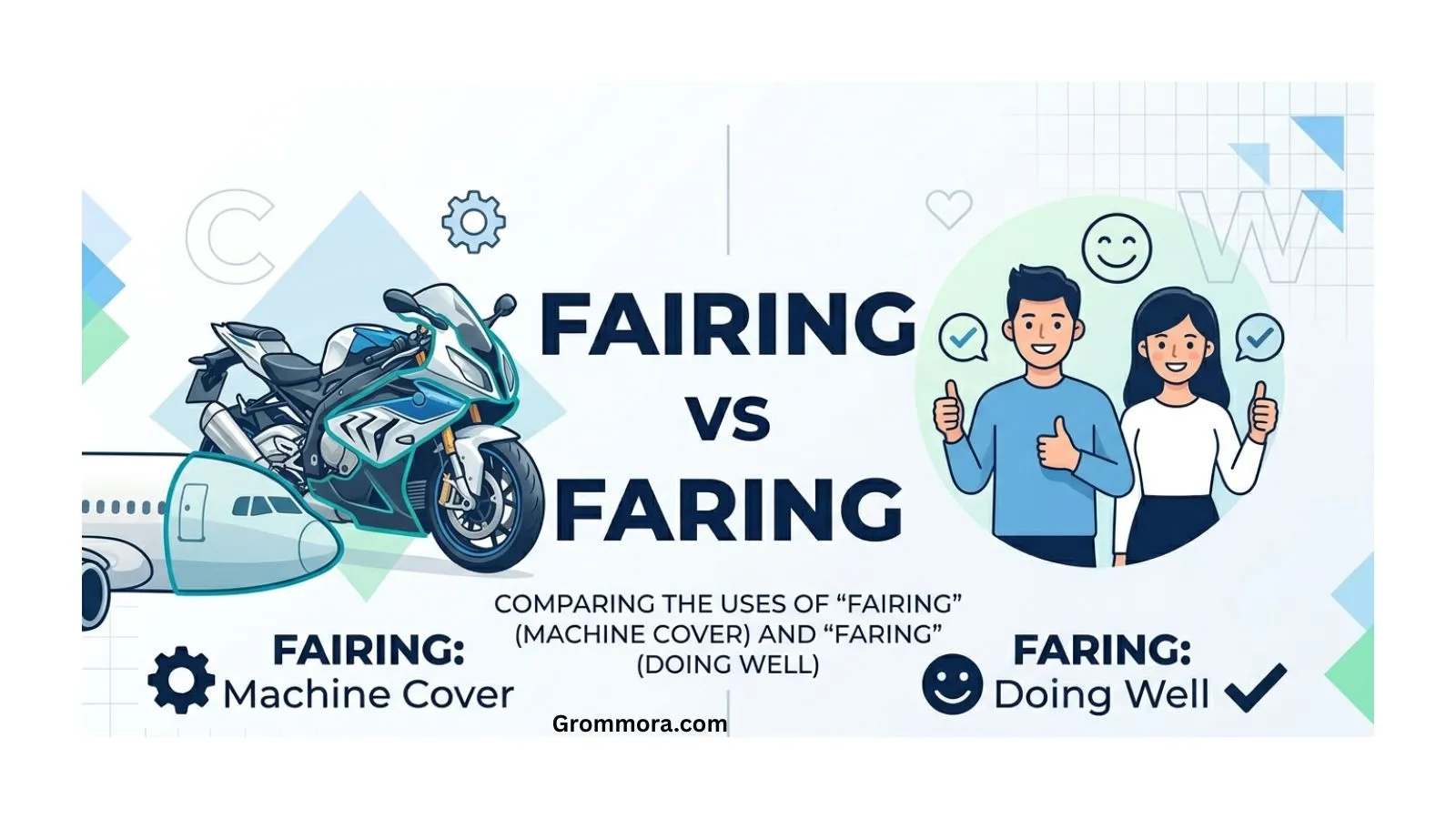
Have you ever typed “fairing vs faring” and paused, unsure which one is correct? You’re not alone. These two words sound exactly the same, but they mean very different things.
That’s why so many people search this keyword—to clear up confusion and avoid mistakes in writing.This mix-up happens because English has many words that sound alike but have different meanings and spellings.
|RELATED Feal vs Feel
These are called homophones. When writing emails, essays, or even social media posts, using the wrong word can make your message unclear or look unprofessional.
In this guide, you’ll learn the simple difference between fairing and faring, where each word comes from, and how to use them correctly.
You’ll also see examples, common mistakes, and tips based on whether you write in American or British English. By the end, you’ll never confuse these two words again.
Fairing vs Faring – Quick Answer
Fairing is a noun. It means a smooth cover on a machine to reduce air or water resistance.
👉 Example: The motorcycle has a front fairing to cut wind.
Faring is a verb form. It comes from “fare” and means how someone is doing or getting along.
👉 Example: She is faring well in her new job.
Simple rule:
- Fairing = object (machine part)
- Faring = action (how someone is doing)
The Origin of Fairing vs Faring
Fairing comes from engineering language. It is linked to the word “fair,” meaning smooth or even. Over time, it became a technical term used in aviation, cycling, and automotive design.
Faring comes from the old English word “faran,” which means “to go” or “to travel.” It later became “fare,” meaning how someone progresses or performs.
That’s why the spellings differ—they come from totally different roots, even though they sound the same.
British English vs American English Spelling
There is no spelling difference between British and American English for these words. Both use fairing and faring the same way.
However, confusion still happens because pronunciation is identical.
Comparison Table
| Word | Meaning | Part of Speech | Example Sentence |
|---|---|---|---|
| Fairing | Protective cover (machine part) | Noun | The bike’s fairing reduces drag. |
| Faring | Doing or performing | Verb (present) | He is faring well after surgery. |
Which Spelling Should You Use?
It depends on what you want to say:
- Use “fairing” if you are talking about machines, bikes, planes, or design.
- Use “faring” when talking about someone’s condition, progress, or situation.
Audience Tips:
- US audience: Same rules apply. Keep usage clear and simple.
- UK/Commonwealth: No difference—same meanings and spelling.
- Global audience: Choose based on context, not location.
Common Mistakes with Fairing vs Faring
❌ How are you fairing today?
✔️ How are you faring today?
❌ The plane’s faring improves speed.
✔️ The plane’s fairing improves speed.
❌ He bought a new faring for his bike.
✔️ He bought a new fairing for his bike.
Tip: If it’s about a thing, use fairing. If it’s about feeling or doing, use faring.
Fairing vs Faring in Everyday Examples
Emails:
- “Hope you are faring well this week.”
News:
- “The economy is faring better this year.”
Social Media:
- “How’s everyone faring today?”
Technical Writing:
- “The aircraft fairing reduces air resistance.”
Casual Talk:
- “My car needs a new fairing.”
Fairing vs Faring – Google Trends & Usage Data
Search data shows that “fairing vs faring” is a common query worldwide.
- “Faring” is more common in general writing and daily conversation.
- “Fairing” is popular in technical fields like aviation, cycling, and engineering.
Usage by Region:
- USA & UK: Both words used equally, depending on context
- India & Pakistan: Higher confusion due to similar pronunciation
- Global: “Faring” searched more in general topics
Comparison Table (Side-by-Side)
| Feature | Fairing | Faring |
|---|---|---|
| Meaning | Cover for machines | Doing or progressing |
| Usage | Technical | General language |
| Word Type | Noun | Verb |
| Example | Bike fairing | Faring well |
| Common Error | Used instead of “faring” | Used instead of “fairing” |
FAQs
What is the meaning of faring well?
It means doing well or progressing in a good way in life, work, or a situation.
What is the meaning of faring on?
It means continuing or managing through a situation, often despite difficulty.
What does fairing mean?
A fairing is a smooth cover on a vehicle (like a bike or plane) that reduces air resistance.
Which is correct, how are you faring or fairing?
“How are you faring?” is correct because it asks about someone’s condition or progress.
Is it faring or fairing well?
“Faring well” is correct because it means doing well.
Is it correct to say “hope you’re faring well”?
Yes, it is correct and commonly used in emails or messages to wish someone well.
Conclusion
The difference between fairing vs faring is simple once you understand their meanings. Fairing is a technical noun used for parts of machines that improve airflow or reduce drag. Faring, on the other hand, is about progress or condition—how someone is doing in life or a situation.
The confusion comes from their identical pronunciation, but their origins and uses are completely different. By focusing on context, you can quickly choose the right word. If you are writing about bikes, planes, or design, go with fairing. If you are asking about someone’s well-being or progress, use faring.
This small spelling difference can make a big impact on clarity and professionalism in your writing. Keep the simple rule in mind, and you’ll avoid common mistakes easily. With practice, choosing the right word will become second nature.