Have you ever typed “more then” and wondered if it was correct? You are not alone. Many people search for “more than or more then” because the words sound the same. But they do not mean the same thing.
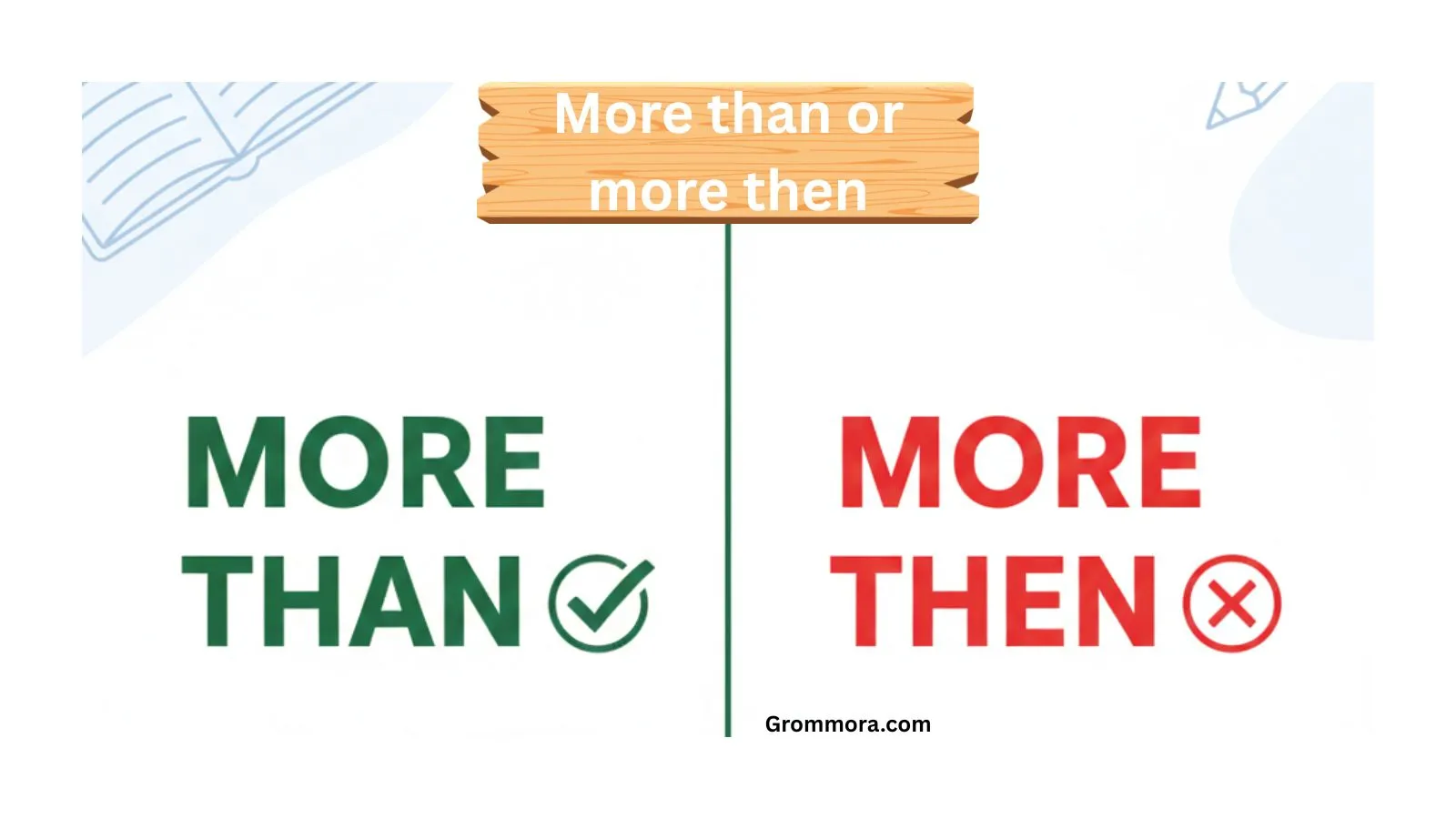
✅More than used for comparison or quantity.
Example:
She has more than 10 books.
❌More then: incorrect phrase (people mistakenly use “then” instead of “than”).
Incorrect phrase (people mistakenly use “then” instead of “than”).
Correct form:
She has more than 10 books.
RELATED: Eying or Eyeing
More Than or More Then – Quick Answer
✅ Correct: More than
❌ Incorrect: More then (in almost all cases)
“More than” is used to compare numbers, amounts, or levels.
Examples:
- She has more than 10 books.
- This costs more than $50.
- I like tea more than coffee.
“Then” is used for time or sequence.
Examples:
- Finish your work, then go home.
- We ate dinner, then watched a movie.
If you are making a comparison, the answer is almost always “more than.”
|See More: Ingrained or Engrained
The Origin of More Than or More Then
The word “than” comes from Old English þanne. It was used for comparisons.
The word “then” also comes from Old English. It meant “at that time.”
Over time, English kept both spellings. They sound alike, but they have different meanings:
- Than → used for comparison
- Then → used for time
Spelling matters
That is why spelling matters. One letter changes the meaning.
British English vs American English Spelling
Good news: there is no difference between British and American English for this phrase.
Both use “more than” for comparisons.
| Usage Type | Correct Form | Example |
|---|---|---|
| Comparison | More than | More than 5 people came. |
| Time order | Then | Finish homework, then relax. |
| Incorrect comparison | More then ❌ | She has more then 5 books. |
Countries like the UK, US, Canada, Australia, and Pakistan all follow the same rule.
Which Spelling Should You Use?
Here is simple advice:
- 🇺🇸 United States → Use more than
- 🇬🇧 United Kingdom → Use more than
- 🌍 Commonwealth countries → Use more than
- 🌎 Global business writing → Use more than
Note:
There is no regional spelling difference. If you are comparing numbers or amounts, always use more than.
Common Mistakes with More Than or More Then
Here are frequent errors:
Wrong: She earns more then me.
✅ She earns more than me.
Wrong: There were more then 100 guests.
✅ There were more than 100 guests.
❌ I like pizza more then burgers.
✅ I like pizza more than burgers.
Tip to remember:
Think of “A” in than = compare.”
More Than or More Then in Everyday Examples
📧 Emails
- We received more than 200 applications.
- Complete the form, then submit it.
📰 News
- The company made more than $1 million in profit.
- The storm hit, then power went out.
📱 Social Media
- I slept more than 8 hours today!
- First gym, then coffee.
📄 Formal Writing
- The results show more than 60% growth.
- The committee met, then voted.
More Than or More Then – Google Trends & Usage Data
Search data shows:
- “More than” is searched far more often.
- “More then” appears mainly in correction searches.
- Top countries searching this phrase include:
- United States
- United Kingdom
- India
- Pakistan
- Canada
Most people search it to check spelling before exams, writing emails, or publishing content.
Comparison Table – Keyword Variations
| Phrase | Correct? | Meaning | Example |
|---|---|---|---|
| More than | ✅ Yes | Comparison | More than 5 days |
| More then | ❌ No | Misspelling | Incorrect usage |
| Then | ✅ Yes | Time/sequence | Eat, then sleep |
| Than | ✅ Yes | Comparison word | Bigger than mine |
FAQs
1.What is the difference between more then and more than?
“More than” is correct for comparison; “more then” is a spelling mistake.
2.When to use than or then?
Use than for comparison and then for time or sequence.
3.Is it more than ever or then ever?
The correct phrase is more than ever.
4.When should I use more than?
Use it when comparing numbers, amounts, or preferences.
5.Is it correct to say “more than”?
Yes, “more than” is correct and commonly used in English.
6.What are some common grammar mistakes?
Confusing than/then, your/you’re, their/there/they’re, and its/it’s.
7.Is it I’m better than you or then you?
The correct sentence is I’m better than you.
8.What is a better word than “then”?
It depends on context; you can use afterward, next, later, or therefore.
9.Do you say “OK then” or “OK than”?
The correct phrase is OK then.
Conclusion
In conclusion, the confusion between more than or more then is very common, but the rule is simple. Use more than when you are making a comparison. Use then when talking about time or what happens next. The phrase more then is almost always a spelling mistake. Both British and American English follow the same rule, so there is no regional difference to worry about. Remember that than is for comparing, and then is for timing. A small spelling error can change the meaning of your sentence and affect your professional writing. By understanding this difference, you can write clearly and confidently in emails, essays, social media posts, and formal documents. Keep practicing, and soon choosing the correct word will feel natural and easy.