
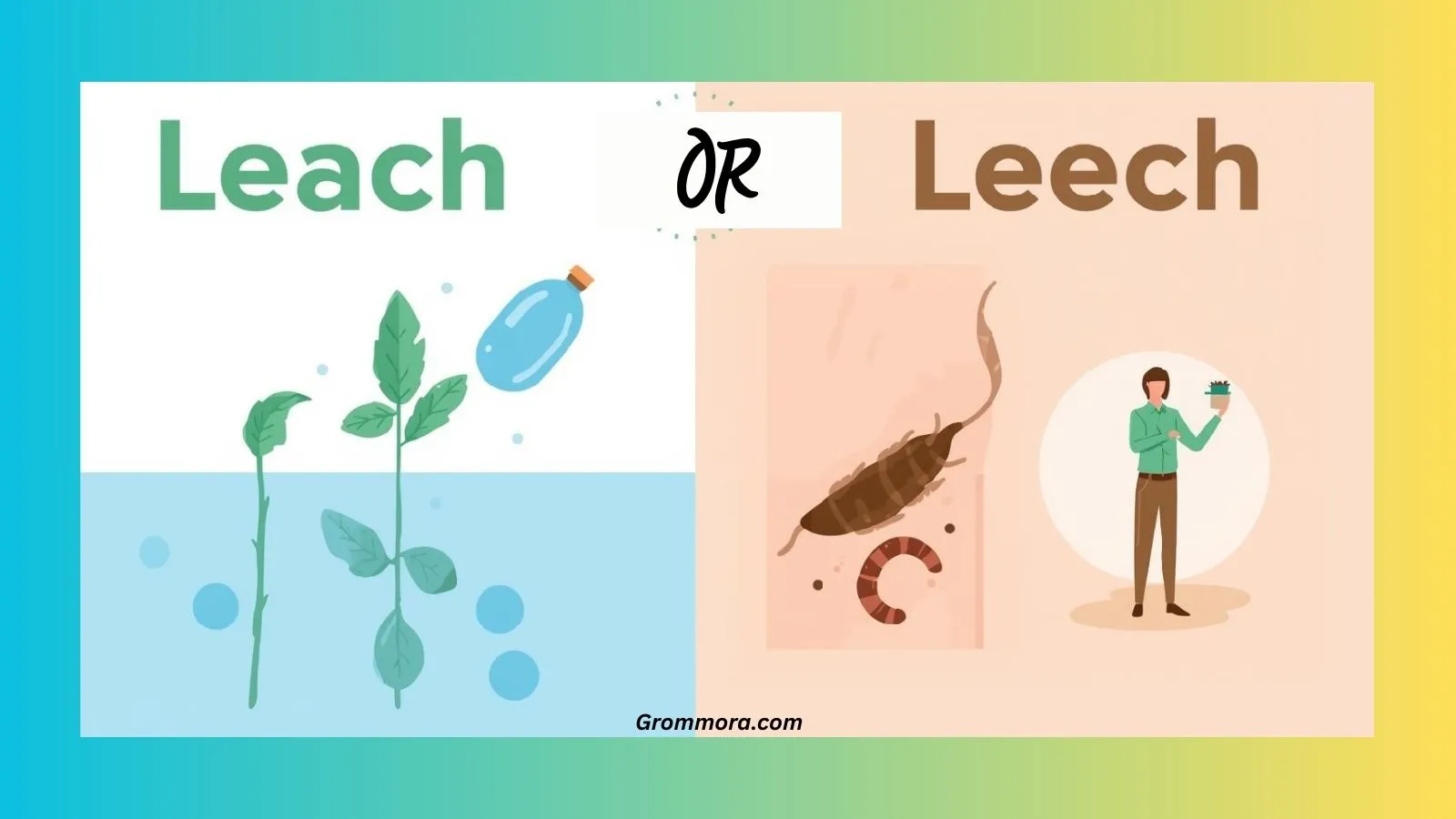
When it comes to writing or speaking, the words “leach” and “leech” often confuse people. Many wonder which spelling is correct, when to use each, and if there’s a difference between British and American English. Understanding the distinction is essential because using the wrong word can change your meaning completely.
People usually search for “leach or leech” because they’ve seen it in writing, science texts, or news articles. For example, someone might read about “chemicals leaching into water” or hear about a “leech feeding on a patient” and get confused. This article clears that up. By the end, you’ll know which spelling to use, understand the history of the words, and see practical examples in everyday writing. Whether you’re a student, professional writer, or just curious, this guide will help you avoid mistakes and write with confidence.
Leach or Leech Slang

In slang, leech is often used to describe someone who constantly takes from others without giving anything back. For example, a friend who always borrows money or relies on others’ efforts may be called a “leech.” On the other hand, leach is rarely used in slang and mostly keeps its literal meaning of draining or filtering. Remember, when using casual or online language, leech is the word you want to describe clingy or exploitative behavior.
Leach or Leech Bible

The confusion between leach and leech also appears in biblical texts, though rarely. In the Bible, “leech” is often mentioned literally as a bloodsucking creature, symbolizing greed or sin in some translations. On the other hand, “leach” does not appear in scripture, as it refers to filtering or draining substances, which is a modern usage. Understanding this distinction helps readers correctly interpret passages and avoid misreading metaphorical or literal meanings in biblical contexts.
Leach or Leech – Quick Answer
Quick Answer:
- Leach → To remove or extract substances (usually liquids) through filtering or washing.
- Example: Rainwater can leach nutrients from the soil.
- Leech → A bloodsucking worm or someone who takes advantage of others.
- Example: The leech attached to the patient’s arm.
- Figurative: He’s a financial leech, always taking without giving.
Tip: Think “leach = drain” and “leech = parasite” to remember the difference.
The Origin of Leach or Leech
The confusion comes from history.
- Leach (verb) comes from Old English leccan, meaning “to wet” or “to moisten.” Over time, it evolved to mean “to filter or drain.”
- Leech (noun) originates from Old English læce, meaning “physician” because leeches were used in medicine. Later, it became associated with bloodsucking worms.
Both words sound alike but diverged in spelling during the Middle English period, which explains why we now have two forms with different meanings.
British English vs American English Spelling
Spelling differences:
- British English → Both leach and leech are used the same way as in US English.
- American English → Same usage; no change in spelling.
| Word | British English | American English | Example Usage |
|---|---|---|---|
| Leach | ✅ Correct | ✅ Correct | Chemicals can leach into soil. |
| Leech | ✅ Correct | ✅ Correct | A leech can attach to the skin. |
Note: The spelling doesn’t change between US and UK English, but the context (literal vs figurative) matters.
Which Spelling Should You Use?
- Scientific/Environmental Writing: Use leach when talking about liquids or substances filtering through soil.
- Medical/Biological Context: Use leech for worms or historical medicinal context.
- Figurative Meaning: Use leech when describing a person who exploits others.
Audience Tip: If writing for a global audience, stick to context-based usage rather than worrying about US vs UK spelling.
Common Mistakes with Leach or Leech
- Wrong: The chemicals leech into the soil. ✅
Correct: The chemicals leach into the soil. - Wrong: A financial leach took all my money. ✅
Correct: A financial leech took all my money. - Wrong: Leach attached to my leg during the hike. ✅
Correct: Leech attached to my leg during the hike.
Tip: Always double-check the context—filtering/draining = leach, parasite/figurative = leech.
Leach or Leech in Everyday Examples
- Email: “Please ensure the chemicals don’t leach into the water supply.”
- News: “Medicinal leeches are being used in modern surgeries.”
- Social Media: “Stop being a leech and contribute something!”
- Formal Writing: “The fertilizer can leach essential minerals from the soil.”
Leach or Leech – Google Trends & Usage Data
Google Trends shows:
- Leech is more commonly searched in medical or biological contexts.
- Leach appears more in environmental and chemistry-related searches.
- By Country: UK, US, Canada, and Australia all show similar usage patterns.
Insight: Confusion usually arises in writing assignments, blogs, or casual communication rather than spoken English.
Keyword Variations Comparison Table
| Keyword | Meaning | Example |
|---|---|---|
| Leach | To drain or filter | “Rainwater can leach minerals from soil.” |
| Leech | Worm or exploiter | “The leech attached to the patient’s arm.” |
| Leaching | Process of filtering | “Leaching removes toxins from soil.” |
| Leeched | Past tense of leech | “He leeched off his colleagues for years.” |
FAQs
1.What is a leech?
A leech is a small bloodsucking worm, often found in freshwater.
2.Is it leech off or leach off?
It’s leech off when talking about someone exploiting others.
3.What does it mean if someone is a leach?
It means they take from others without giving back.
4.How do you spell leech the animal?
It’s spelled leech.
5.Is it spelled leach or leech?
Leech is the animal; leach means to drain or filter.
6.Is a leach an animal?
If you mean the bloodsucking worm, it’s called a leech.
7.How does a leach look like?
A leech is soft, elongated, segmented, and often dark brown or green.
8.Is leach a fish?
No, leach is not a fish; it refers to filtering or draining.
9.Do leeches only eat blood?
Mostly yes, some leeches feed on blood, while a few eat small invertebrates.
Conclusion
Knowing the difference between leach and leech is simple once you focus on context. Leach refers to draining, filtering, or washing substances, commonly used in environmental science. Leech refers to bloodsucking worms or figuratively to exploiters. Both words are spelled the same in US and UK English, but using the wrong one can confuse readers. For global writing, prioritize meaning over regional spelling. Checking context ensures your communication is clear, professional, and mistake-free. With this guide, you can confidently use leach in scientific discussions and leech in biological or figurative contexts, avoiding one of the most common English word confusions.