Are you confused about whether to write Chris’ or Chris’s? You’re not alone. Many English writers, students, and professionals struggle with apostrophes, especially when forming possessives for names ending in “s.” The difference might seem minor, but using the wrong form can make your writing look careless. People often search for this keyword to clarify grammar rules, avoid mistakes in emails, essays, social media posts, and professional writing.
In this guide, we’ll break down the confusion around Chris’ or Chris’s, explain why both exist, compare British and American usage, and give you clear advice on which form to use. By the end, you’ll confidently know how to write possessives for names like Chris, whether in casual or formal contexts.
hris’ or Chris’s in Everyday Examples
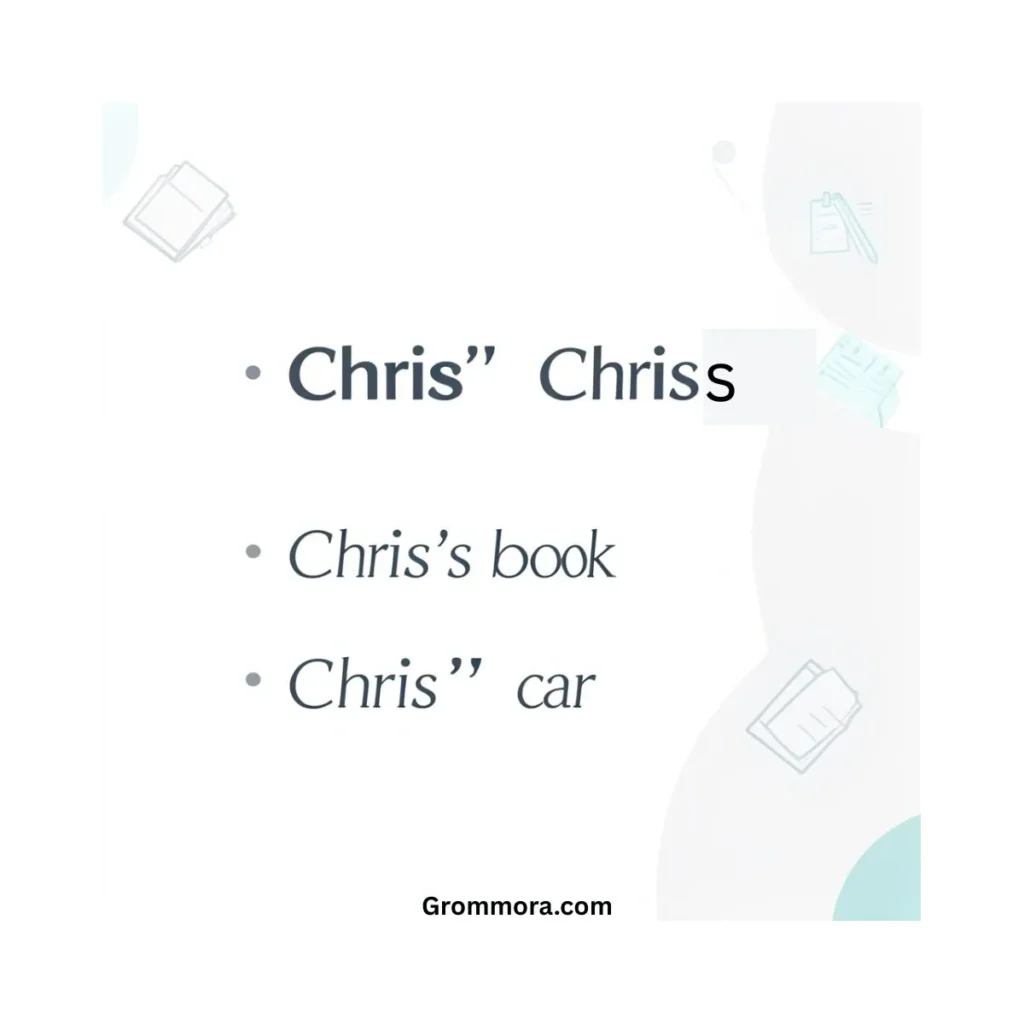
Using Chris’ or Chris’s correctly in sentences can make your writing clear and professional. For American English, Chris’s is preferred: Chris’s report was submitted on time, I borrowed Chris’s laptop for the project, or Chris’s presentation impressed everyone. In British English, Chris’ is also acceptable, especially in newspapers or informal writing: Chris’ team won the match, We visited Chris’ house yesterday, or Chris’ idea sparked a great discussion. On social media, both forms appear: Happy birthday to Chris’s amazing work! or Celebrating Chris’ success today! In emails and formal documents, using the correct possessive shows attention to detail and professionalism. Always remember: if you pronounce the extra “s” sound, use Chris’s; if not, Chris’ works fine.
Chris’ or Chris’s – Quick Answer
The short answer: both are correct, but usage depends on style guides and English variants.
- Chris’s → Preferred in American English: Chris’s book is on the table.
- Chris’ → Common in British English or older texts: Chris’ book is on the table.
Rule of thumb: If you pronounce the extra “s” sound, use Chris’s; if not, Chris’ is acceptable.
The Origin of Chris’ or Chris’s
The possessive form of names ending in s has been debated for centuries. Traditionally, English added ’s to show ownership (e.g., James’s hat). Over time, dropping the extra “s” became a stylistic choice, especially in print media, leading to forms like Chris’.
The variation exists because English evolved differently in the US and UK. In early printing, short forms like Chris’ saved space and were easier to read. Modern style guides, however, prefer consistency, which is why American guides lean toward Chris’s, while British texts may use Chris’.
British English vs American English Spelling
| Feature | American English | British English | Example |
|---|---|---|---|
| Possessive for names ending in s | Add ‘s → Chris’s | Can drop extra s → Chris’ | Chris’s car (US) vs Chris’ car (UK) |
| Pronunciation | Always pronounced → adds “iz” sound | Often silent → just apostrophe | Chris’s → “Chris-iz” / Chris’ → “Chris” |
| Style Guide | Chicago Manual of Style, APA | Oxford, Collins | Guides recommend following regional rules |
Key takeaway: American English favors clarity and full pronunciation, while British English allows simplification.
Which Spelling Should You Use?
- US audience: Always write Chris’s. It’s clear, formal, and aligns with major style guides.
- UK/Commonwealth audience: Chris’ is widely accepted, though Chris’s is not incorrect.
- Global writing: Consider your audience. For international readers, Chris’s avoids confusion and ensures proper pronunciation.
Common Mistakes with Chris’ or Chris’s
- Incorrect: I met Chris’ yesterday.
Correct: I met Chris yesterday. (no possessive needed here) - Incorrect: Chriss book is new.
Correct: Chris’s book is new. - Incorrect mixing styles: Using Chris’ in US formal writing may look outdated.
Tip: Always check your audience and follow the style guide (Chicago, AP, Oxford).
Chris’ or Chris’s in Everyday Examples
- Email: “Please review Chris’s report before the meeting.”
- News article: “Chris’ team won the championship.”
- Social media: “Happy birthday to Chris’s amazing work!”
- Formal writing: “The success of Chris’s initiative was celebrated by the committee.”
Chris’ or Chris’s – Google Trends & Usage Data
Search trends show higher interest in Chris’s in the US, while Chris’ sees more clicks in the UK. Globally, queries peak during school terms and grammar-focused discussions. Popular contexts include: academic writing, email etiquette, and social media captions.
Keyword Variations Comparison Table
| Variation | Usage | Example |
|---|---|---|
| Chris’s | US, formal writing | Chris’s car is new. |
| Chris’ | UK, older texts | Chris’ car is new. |
| Chris | No possession | I spoke to Chris yesterday. |
FAQs About Chris’ or Chris’s
- Chris’s or Chris?
- Chris’s for possessive; Chris if just the name.
- Chris or Chris’s birthday?
- Chris’s birthday (possessive).
- James or James’s?
- James’s (US), James’ (UK) for possessive.
- Lucas’s or Lucas’s?
- Lucas’s (US) or Lucas’ (UK) for possessive.
- Lopez’s or Lopez’s?
- Lopez’s (US) or Lopez’ (UK).
- Marcus or Marcus’s?
- Marcus’s for possessive; Marcus as just the name.
- Lewis or Lewis’s?
- Lewis’s for possessive.
- Maximus or Maximus?
- Maximus if name; Maximus’s if possessive.
- Flores or Flores’s?
- Flores’s (US) or Flores’ (UK) for possessive.
Conclusion
Choosing between Chris’ and Chris’s depends on your audience, region, and style guide. American English prefers Chris’s for clarity, pronunciation, and professional writing, while British English allows Chris’ as a simplified form. When in doubt, especially in global contexts, Chris’s is the safest option. Avoid common mistakes by checking if you actually need a possessive, and keep your writing consistent. With these guidelines, you can confidently write possessives for names ending in s in emails, articles, social media, and formal documents.