
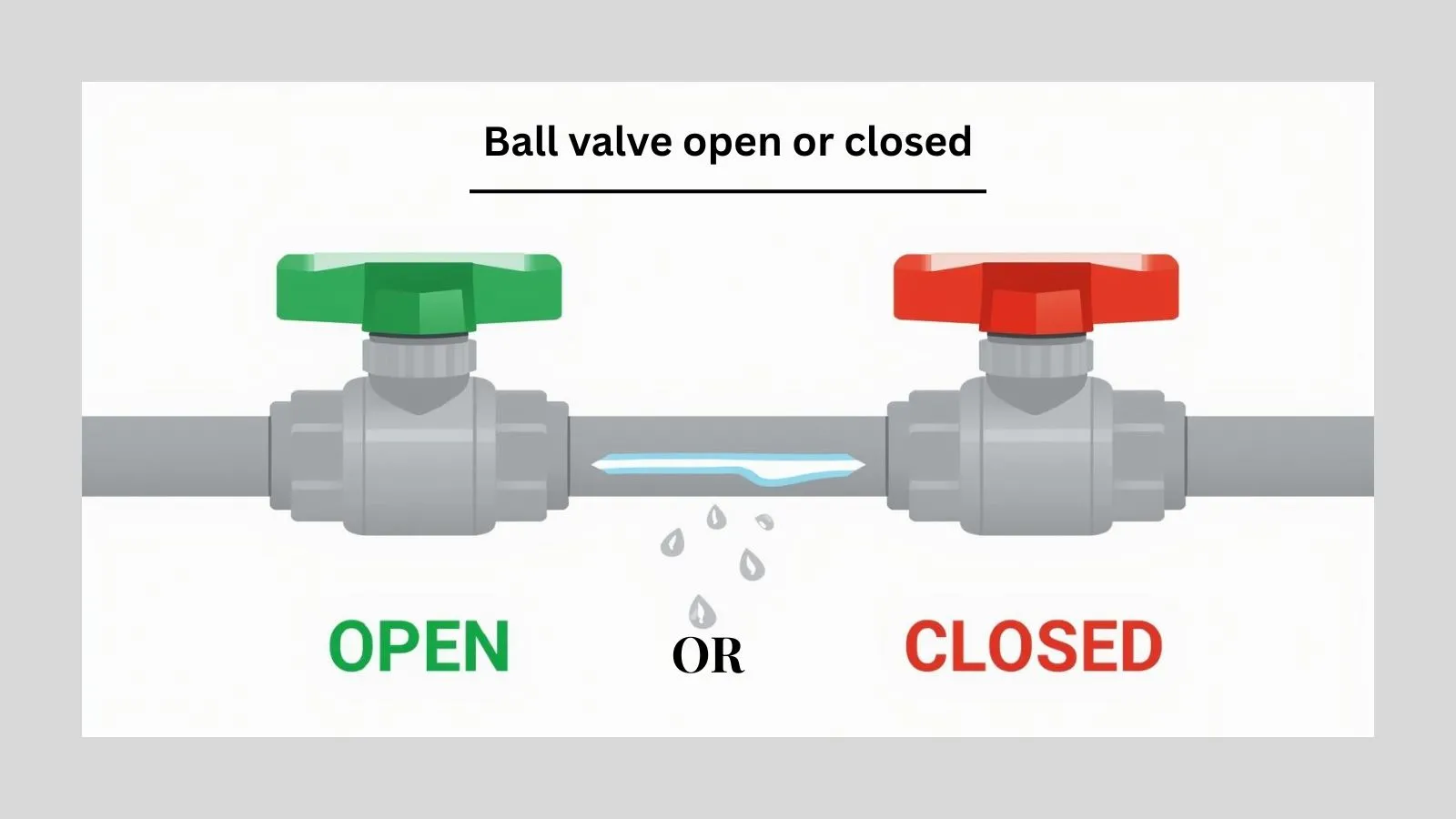
Many people search “Open valve position or closed” because they are unsure which way the valve should face. This usually happens during plumbing repairs, gas line checks, water shutoffs, or emergency leaks. A small mistake can cause big problems—no water flow, pressure loss, or even safety risks with gas lines.
The confusion is simple. Ball valves look easy, but their position is not always obvious. Some people think turning the handle right means “off.” Others think it depends on the pipe direction. Online diagrams often add more confusion instead of clarity.
This article solves that problem clearly and fast. You will get a quick answer, visual-style explanations, and real-life examples. You will also learn common mistakes, how people use this phrase in daily life, and how its usage varies by region. By the end, you will know exactly how to tell if a ball valve is open or closed—without guessing.
PVC Open valve position or Closed
A PVC ball valve is open or closed based on the handle position, not the direction you turn it. When the handle is parallel to the PVC pipe, the valve is open, and water or fluid can flow freely through the system. When the handle is perpendicular to the pipe, the valve is closed, and flow is completely stopped. This rule applies to most PVC ball valves used in plumbing, irrigation, aquariums, and industrial systems. Many PVC valves also include molded arrows or “ON/OFF” markings, which help confirm the position. If no markings are present, always rely on handle alignment. Avoid leaving a PVC ball valve partially open, as this can wear out the internal ball and seals over time. Understanding this simple visual rule prevents leaks, pressure issues, and system damage.
Open valve position or Closed – Quick Answer
A ball valve is open when the handle is parallel to the pipe.
A ball valve is closed when the handle is perpendicular (crossing) the pipe.
Examples:
- Handle in line with pipe → Open (fluid flows)
- Handle at 90 degrees → Closed (flow stops)
This rule works for water, gas, and air ball valves in most systems.
The Origin of “Open valve position or Closed”
The term ball valve comes from the ball-shaped core inside the valve. This ball has a hole through its center. When the hole lines up with the pipe, fluid passes through. When turned sideways, flow stops.
The phrase “open or closed” became common as ball valves replaced older gate valves. Ball valves were faster and safer, but people needed a simple way to describe their position.
There are no true spelling variations of the term itself. Differences appear more in usage style, not spelling, especially in technical manuals versus everyday language.
British English vs American English Spelling
There is no spelling difference in “Open valve position or closed” between British and American English. The term is technical and standardized.
What does differ is word choice and phrasing.
| Aspect | British English | American English |
|---|---|---|
| Common phrase | “Is the valve open or shut?” | “Is the valve open or closed?” |
| Technical manuals | Same spelling | Same spelling |
| Everyday use | Slightly formal | More direct |
Which Spelling Should You Use?
- US audience: Use “open or closed”
- UK/Commonwealth: “open or shut” is also acceptable
- Global or technical writing: Use “Open valve position or closed”
For SEO and clarity, “open or closed” works best worldwide.
Common Mistakes with Ball Valve Open or Closed
- Thinking turned right means closed
→ Direction does not matter. Handle position does. - Assuming all valves work the same
→ Gate valves work differently. Ball valves are visual. - Forcing the handle
→ This can damage seals or break the valve. - Ignoring handle labels
→ Some valves have arrows or “ON/OFF” marks.
Ball Valve Open or Closed in Everyday Examples
Email:
“Please check if the ball valve is open or closed before restarting the pump.”
News:
“The leak stopped once the main ball valve was closed.”
Social Media:
“Water still off. Turns out the ball valve was closed 😅”
Formal Report:
“The system failed due to the ball valve remaining in the closed position.”
Ball Valve Open or Closed – Google Trends & Usage Data
Search interest for “ball valve open or closed” is highest in:
- United States
- Canada
- United Kingdom
- Australia
It is most searched during:
- Home repairs
- Plumbing emergencies
- DIY projects
The phrase is commonly used by homeowners, technicians, and students learning basic mechanics.
Keyword Variations Comparison Table
| Variation | Usage Context |
|---|---|
| ball valve open or closed | General and SEO |
| is ball valve open or closed | Question-based searches |
| how to tell ball valve open | DIY guides |
| ball valve open position | Technical manuals |
FAQs
1:Should you sweat a ball valve open or closed?
Always sweat (solder) a ball valve fully open to avoid damaging the ball or seals.
2:Which direction to open valves?
Parallel to the pipe is open; perpendicular is closed.
3:Is there a wrong way to install a ball valve?
Yes, installing backwards or forcing it can cause leaks or damage.
4:Is O or S open?
Usually, O = open, S (or off) = closed, but check manufacturer labels.
5:How to check if a valve is open or closed?
Look at the handle position: parallel = open, perpendicular = closed.
6:How do you adjust a ball valve?
Turn the handle 90 degrees to open or close; avoid forcing it partially.
7:Is clockwise open or closed?
Clockwise usually closes the valve, counterclockwise opens it.
8:How do you adjust a ball valve?
Rotate the handle fully parallel or perpendicular to the pipe; partial turns may damage the valve.
Final Thoughts
Understanding ball valve open or closed is simple once you know one rule: parallel is open, perpendicular is closed. This small detail can prevent leaks, save time, and avoid costly mistakes. Most confusion comes from assumptions, not design.
There is no spelling difference across English types, which makes the term easy to use globally. What matters is clear wording and correct understanding. Whether you are a homeowner, technician, or student, this knowledge helps in real situations.
Always check handle position before starting or stopping flow. Avoid forcing the valve, and do not leave it half open unless required. Use the full phrase in professional or instructional writing for clarity and search visibility.
With this guide, you now have both the quick answer and the full explanation—no confusion, no guesswork.