
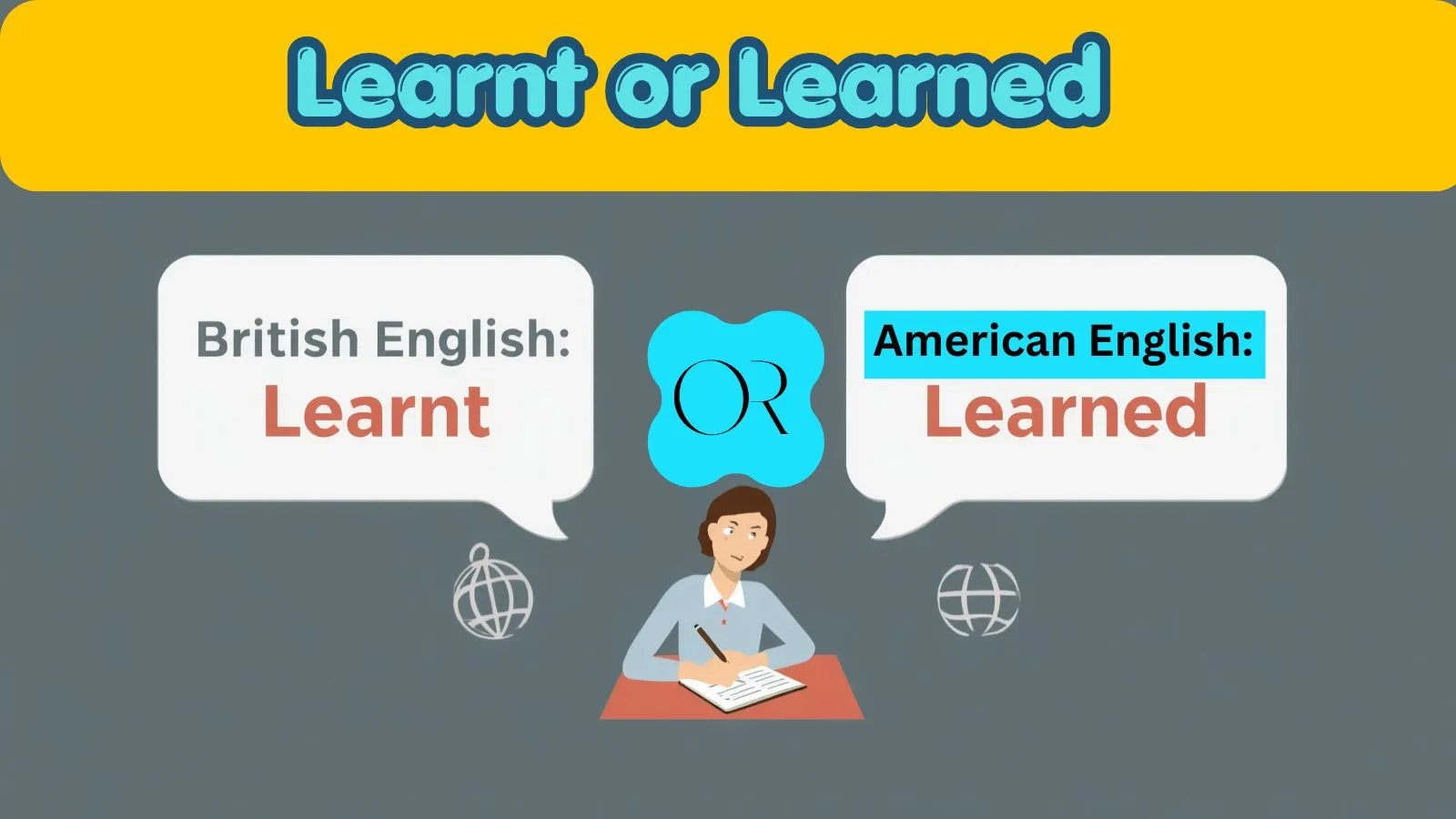
Both learnt and learned are correct, but they are used in different varieties of English.
Imagine you’re writing an email or a school essay, and suddenly you pause: should you write “I learned a lot” or “I learnt a lot”? Many people face this small but confusing choice. It’s not a grammar mistake—it’s about style and region.
The confusion happens because English is used worldwide, and different countries prefer slightly different spellings. Some words change form depending on whether you follow American English or British English. That’s exactly what’s going on here.
|RELATED: Laser or Lazer
What is the Difference Between Learnt and Learned?
Both learnt and learned are past forms of the verb “learn.”
- Learned → More common in American English
- Learnt → More common in British English
Which one is correct?
👉 Both are correct.
The only difference is regional usage, not meaning. They both describe something you studied or understood in the past.
|See also: Leach or Leech
When to Use Learned
Learned is the preferred form in American English and is widely accepted in global writing.
Meaning:
It means gained knowledge or skill in the past.
Examples:
- I learned how to drive last year.
- She learned English from online videos.
- We learned an important lesson today.
- He learned coding during the summer break.
Extra Note:
Learned can also be used as an adjective:
- He is a learned man. (means knowledgeable)
This makes learned slightly more flexible in usage.
When to Use Learnt
Learnt is not incorrect—it is simply the British English version.
Meaning:
Same as learned—to gain knowledge or skill.
Why people get confused:
- It sounds similar to other past forms like burnt or dreamt
- Many learners mix British and American styles unknowingly
Example:
- She learnt French in school.
👉 However, if you are writing for an international or American audience, learned is safer.
Usage Comparison (SEO Section)
In modern English:
- Learned is more widely used globally
- Learnt is mostly used in the UK and some Commonwealth countries
Simple comparison:
- American English → learned ✅
- British English → learnt ✅
- International writing → learned 👍 (more common)
So, while both are correct, learned is the more universal choice.
Pronunciation Guide
- Learned → lurn-d
- Learnt → lurnt
Common mistake:
Some people pronounce learned as learn-ed (two syllables), but that only applies when it’s used as an adjective (like “a learn-ed professor”).
Trick to Remember the Difference
Think of this:
👉 Words ending in “-ed” are more common in modern and American English.
So:
- Learn → Learned (easy, standard form)
If you remember played, worked, jumped—then learned fits the same pattern.
FAQs
1. Is learnt correct?
Yes, learnt is correct in British English.
2. Is learned correct?
Yes, learned is correct and more commonly used worldwide.
3. Why do people confuse them?
Because English has regional variations, and both forms sound similar.
4. How do you remember the correct spelling?
Use learned—it follows the common “-ed” past tense rule.
5. Can both be used in English?
Yes, but choose based on your audience: American (learned) or British (learnt).
Summary
- Which is correct? → Both learnt and learned
- What do they mean? → Past form of “learn” its means gained knowledge
- Why is the other confusing? → Different regional usage
👉 Final tip: Use learned for
