
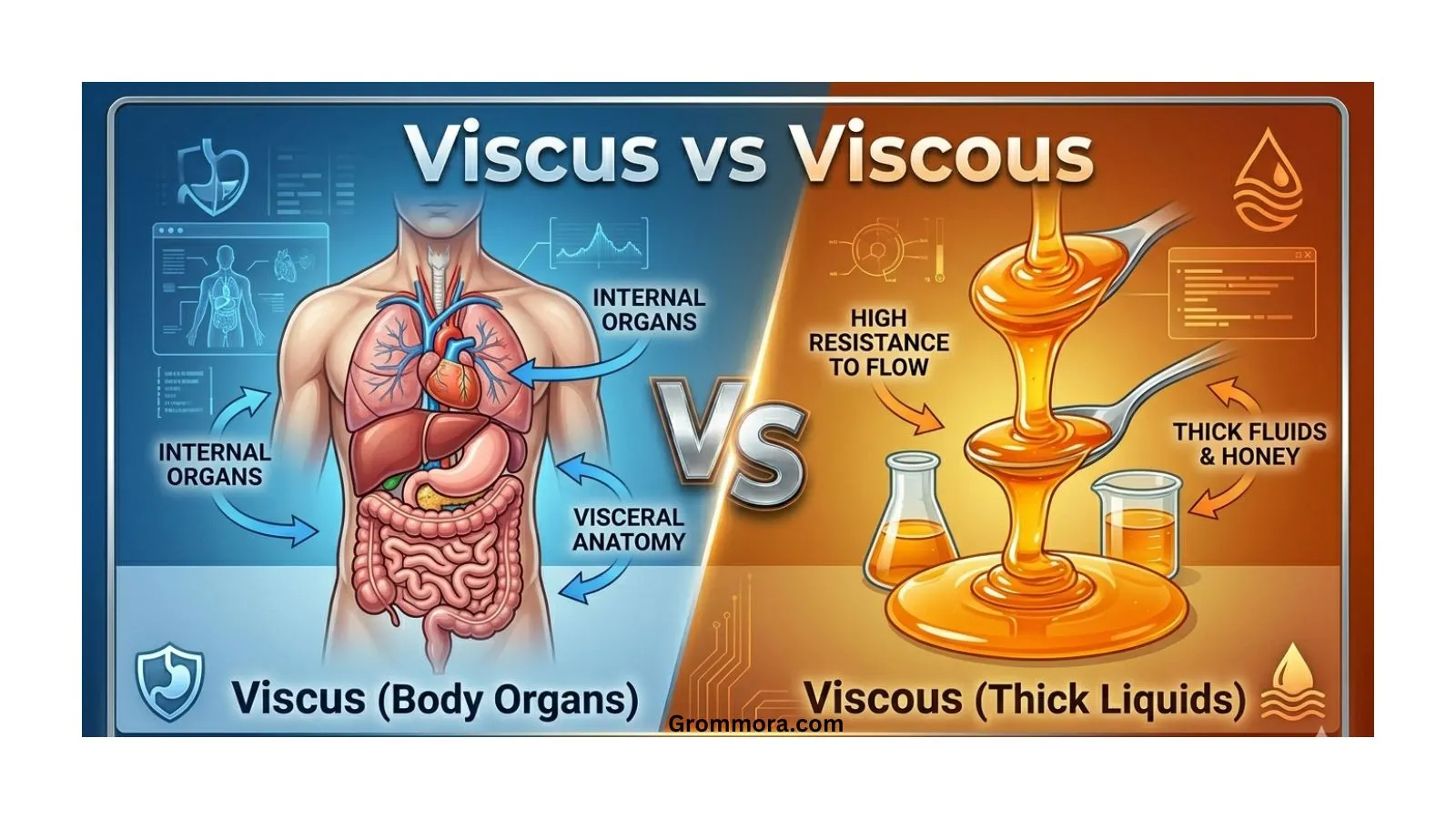
Many people get confused when they see the words “viscus” and “viscous.” They look almost the same, but they mean completely different things. This small spelling difference often leads to big mistakes in writing, exams, and even online searches.
People usually search for this keyword because they are unsure whether they are talking about a body organ or a thick liquid. The confusion becomes common in biology, medical studies, cooking, and science writing. Even native English speakers mix them up because the spelling difference is just one letter.
|RELATED Finaly or Finally
Understanding the difference between viscus vs viscous is important for clear communication. One word is related to the human body, while the other describes how liquids flow. If you use the wrong one, your meaning can change completely.
In this article, you will learn the exact difference, origin, correct usage, spelling rules, and real-life examples. By the end, you will never confuse these two words again.
Viscus vs Viscous – Quick Answer
Viscus refers to an internal organ in the body (like liver or stomach).
Viscous describes a thick, sticky liquid that flows slowly.
Examples:
- The doctor studied the damaged viscus.
- Honey is a viscous liquid.
Simple rule:
👉 Viscus = body organ
👉 Viscous = thick liquid
The Origin of Viscus vs Viscous
Both words come from Latin but evolved differently.
- Viscus (plural: viscera) comes from Latin meaning internal organs of the body. It is used in medical and biological contexts.
- Viscous comes from the Latin word viscum, meaning sticky birdlime. It later developed into a scientific term describing thick fluids.
Even though they sound similar, they entered English through different meanings and uses.
British English vs American English Spelling
There is no spelling difference between UK and US English for these words. The confusion is not regional—it is lexical (meaning-based).
However, usage frequency may vary in academic fields.
| Word | Meaning | Common Field | Example Sentence |
|---|---|---|---|
| Viscus | Internal organ | Medicine/Biology | The surgeon examined the viscus. |
| Viscous | Thick liquid | Science/Chemistry | Oil is more viscous than water. |
Which Spelling Should You Use?
- Medical students & doctors: Use viscus when referring to organs.
- Scientists & engineers: Use viscous for fluids and materials.
- General writing: You will almost always use viscous.
- Everyday use: “Viscus” is rare outside medical texts.
👉 Tip: If you’re not talking about the human body, you probably mean viscous.
Common Mistakes with Viscus vs Viscous
- ❌ Writing “viscus oil” → ✔ Correct: viscous oil
- ❌ Confusing anatomy terms in essays
- ❌ Using “viscous” for body organs
- ❌ Spelling mistakes due to similar pronunciation
Simple fix:
Always check if you mean body part or fluid.
Viscus vs Viscous in Everyday Examples
- Email (Medical):
“The patient’s viscus showed signs of inflammation.” - News Article:
“The spill involved a highly viscous chemical substance.” - Social Media:
“Honey is so viscous, it barely moves!” - Scientific Report:
“Viscous fluids resist flow under pressure.” - Academic Writing:
“Damage to the viscus can lead to severe complications.”
Viscus vs Viscous – Google Trends & Usage Data
Search data shows:
- “Viscous” is far more commonly searched worldwide.
- It appears frequently in science, cooking, and everyday language.
- “Viscus” is rarely searched, mostly in medical education.
Countries with higher usage:
- USA: science and cooking contexts
- UK: academic and medical writing
- India & Pakistan: exam and biology learning searches
👉 Conclusion: “Viscous” dominates general internet usage.
Comparison Table: Viscus vs Viscous
| Feature | Viscus | Viscous |
|---|---|---|
| Meaning | Internal organ | Thick, sticky liquid |
| Field | Medical/Biology | Science/Chemistry |
| Usage Frequency | Rare | Common |
| Example | Liver is a viscus | Honey is viscous |
FAQs – Viscus vs Viscous
Is it viscous or viscus?
It depends: viscous means thick liquid, while viscus refers to a body organ.
What does viscus mean?
Viscus means an internal organ in the body, especially in medical terms.
Is the heart a viscus?
Yes, the heart is considered a viscus (internal organ).
What is the difference between vicious and viscous?
Vicious means cruel or violent, while viscous means thick and slow-flowing.
What is an example of a viscus?
The stomach, liver, or heart are examples of a viscus.
What does viscous mean?
Viscous means a thick, sticky liquid that flows slowly, like honey or oil.
Conclusion
Understanding viscus vs viscous is simple once you know the meaning behind each word. One belongs to the world of anatomy, while the other describes how liquids behave. The confusion happens because both words look and sound similar, but their usage is completely different.
For school, exams, or professional writing, first understand the context. Use viscus when referring to a body organ, and use viscous when describing a thick liquid like honey or oil.
This small difference can improve your writing clarity and help you avoid common spelling mistakes. Whether you are a student, writer, or researcher, mastering this distinction will make your English more accurate and professional.
In short, remember: viscus = body, viscous = liquid. That simple rule will save you from confusion forever.