Many people search for “how to use then vs than” because these two words look almost the same but have very different meanings. Even fluent English speakers mix them up. This can make writing confusing or even change the meaning of a sentence.
|See also Cold or hot water for grease stain
The problem is simple: “then” is about time, while “than” is about comparison. But in real life, people often type fast, rely on sound, and forget the rule. That’s why mistakes happen in emails, exams, and even professional writing.
This article gives you a quick answer first, then explains everything in simple steps. You will learn the meaning, origin, common mistakes, and how to use both words correctly in daily life. By the end, you will never confuse “then” and “than” again.
How to Use Then vs Than – Quick Answer
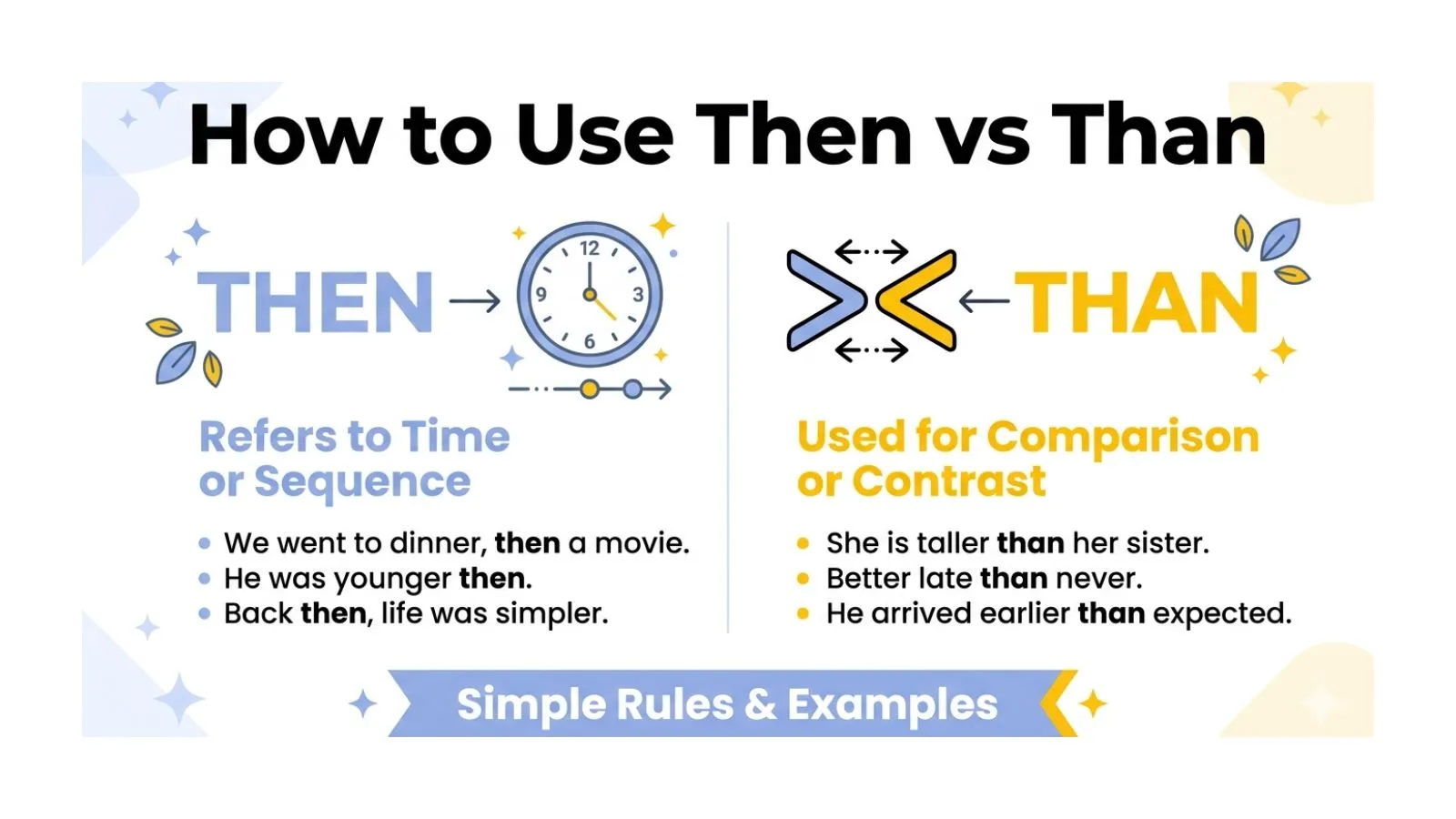
Then = time or sequence
Than = comparison
Examples:
- I finished my homework, then I went outside.
- She is taller than her brother.
👉 Easy trick:
- If you are talking about time, use then
- If you are comparing, use than
The Origin of How to Use Then vs Than
Both words come from Old English, but they developed differently over time.
- Then comes from “þanne”, meaning at that time
- Than comes from “þonne”, used in comparisons
Long ago, they looked and sounded very similar. Over time, English changed, and spelling became fixed. That is why we now have two words with different meanings but similar sounds.
British English vs American English Spelling
Good news: there is no spelling difference between British and American English for “then” and “than.” Both follow the same rules.
However, usage mistakes happen in both regions.
Comparison Table
| Word | Meaning | British English | American English | Example |
|---|---|---|---|---|
| Then | Time/sequence | Same | Same | Finish work, then relax |
| Than | Comparison | Same | Same | Better than before |
Which Spelling Should You Use?
The choice is not about country—it is about meaning.
- Use then if your audience reads about time or steps
- Use than if your audience sees a comparison
Advice:
- US audience: Follow grammar rules strictly
- UK/Commonwealth: Same usage, no difference
- Global writing: Keep sentences simple to avoid confusion
👉 Tip: If unsure, ask yourself: Am I comparing? If yes → use than
Common Mistakes with How to Use Then vs Than
❌ Wrong: She is smarter then me
✔️ Correct: She is smarter than me
❌ Wrong: I will call you than
✔️ Correct: I will call you then
❌ Wrong: First eat, than sleep
✔️ Correct: First eat, then sleep
❌ Wrong: This is better then that
✔️ Correct: This is better than that
👉 Most mistakes happen because both words sound alike.
How to Use Then vs Than in Everyday Examples
Emails
- Please finish the report, then send it to me.
- This option is cheaper than the other one.
News Writing
- The company grew fast, then expanded globally.
- Prices are higher than last year.
Social Media
- Study first, then scroll later.
- This movie is better than I expected!
Formal Writing
- Complete the process, then submit your form.
- This method is more effective than the old one.
How to Use Then vs Than – Google Trends & Usage Data
Search data shows that people often confuse these words worldwide.
- “Than” mistakes are common in comparison sentences
- “Then” mistakes happen in fast typing or casual writing
Popular regions:
- High search interest in: India, Pakistan, USA
- Common in students and ESL learners
👉 Reason: Both words sound similar but serve different roles in grammar.
Comparison Table (Then vs Than)
| Feature | Then | Than |
|---|---|---|
| Purpose | Time/sequence | Comparison |
| Type | Adverb | Conjunction |
| Question to ask | When? | Compared to what? |
| Example | Eat, then sleep | Bigger than me |
FAQs
- How to use then and than correctly?
Use then for time/order and than for comparison. - What’s an easy trick to remember then vs than?
Then = time, Than = comparison (think: “a” in than = compare). - Do you say “OK then” or “OK than”?
Correct is “OK then” because it shows time or sequence. - How to use the then?
Use then to show what happens next: Finish work, then relax. - Why do Americans mix up then and than?
They sound similar, so people confuse them in fast speech or typing. - What is a five sentence for then?
- I woke up, then I brushed my teeth.
- She studied, then she slept.
- We ate dinner, then watched TV.
- He finished work, then went home.
- First think, then speak.
Conclusion
Understanding how to use then vs than is simple once you know the core rule. “Then” is about time, order, or sequence. “Than” is used when you compare two things. This small difference can change the meaning of your sentence, so it is important to use them correctly.
Many people confuse these words because they sound alike. But with practice, the rule becomes natural. Always pause and ask yourself: Am I talking about time or comparing something? This quick check will help you choose the right word every time.
In both casual and professional writing, correct usage makes your message clear and confident. Whether you are writing emails, essays, or social media posts, using “then” and “than” properly improves your English and avoids confusion.
Keep practicing with real examples, and soon you will use them without thinking.