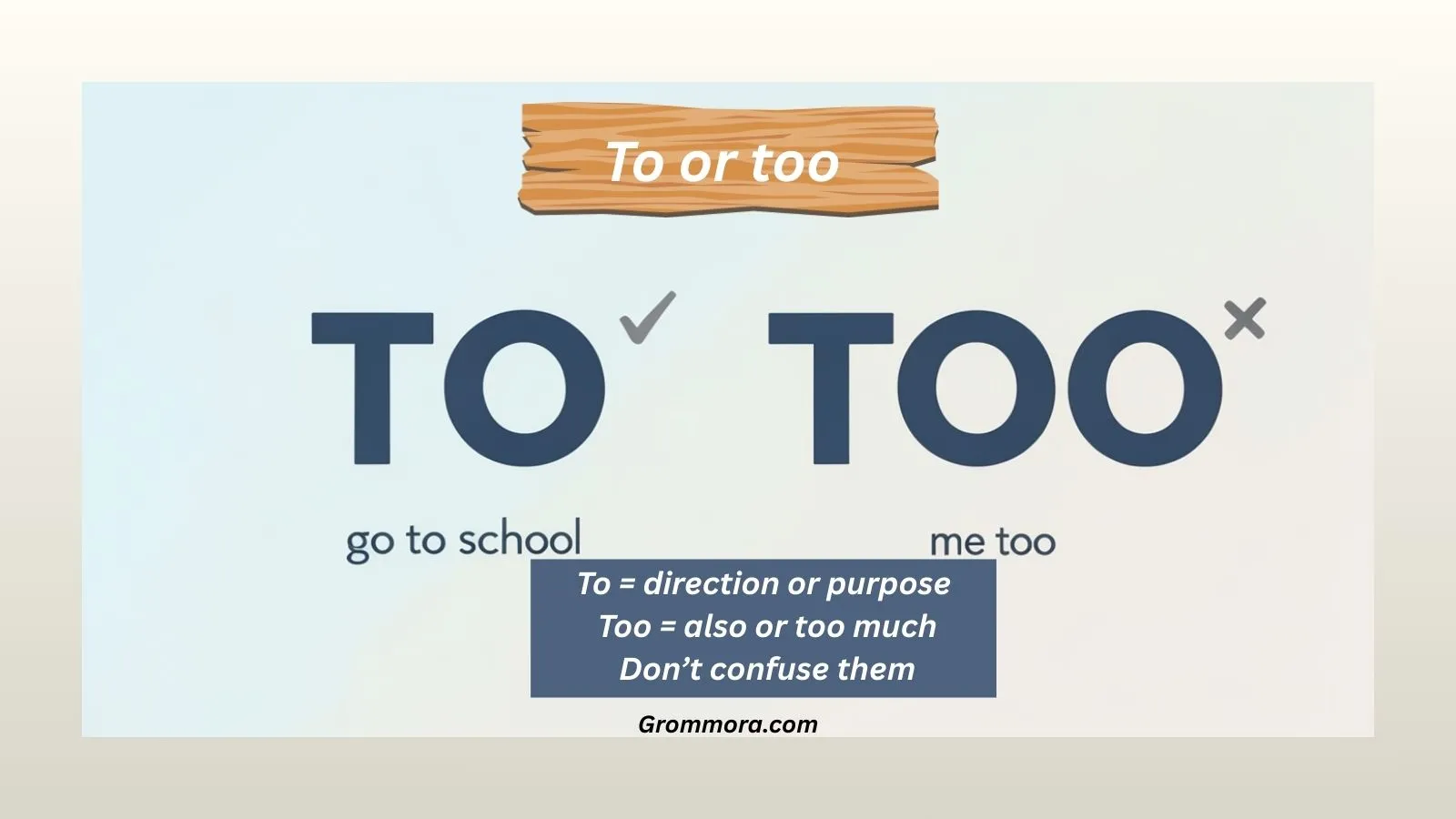
Confused about “to or too”? You’re not alone. These two tiny words often trip up writers, students, and even professionals because they sound the same but have different meanings. Misusing them can make your writing look careless or unprofessional.
People search for this topic because grammar mistakes with “to” and “too” are extremely common in emails, essays, and social media posts. Some are unsure when to use each, while others want to improve clarity in their writing. This article will provide a clear, step-by-step guide to help you understand the difference, avoid mistakes, and use both correctly in everyday situations. By the end, you’ll confidently choose the right word, whether you’re writing for work, school, or online communication.
I Need To or Too
Many people get confused between “I need to” and “I need too”, but only one is correct in standard English. The phrase “I need to” is used when you want to express an action that must be done. For example: “I need to finish my homework before dinner.” It indicates purpose or obligation. On the other hand, “I need too” is almost always wrong unless you are specifically emphasizing addition in informal speech, which is rare and often incorrect. A helpful trick is to ask: can you replace it with “also”? If yes, too may fit; if not, always use to. Remember, correct usage improves clarity in emails, essays, or social media posts. Stick with I need to for professional and everyday writing.
To or Too – Quick Answer
- To is used to indicate direction, destination, or purpose.
- Example: “I am going to the store.”
- Too means also or excessively.
- Example: “I want to come too.” / “This coffee is too hot.”
✅ Quick tip: If you can replace the word with “also” or “excessively,” use too. Otherwise, to is usually correct.
The Origin of To or Too
The word to comes from Old English tō, meaning “toward” or “in the direction of.” It has been a core part of English grammar for centuries.
Too originated from Old English tō as well, but over time, it developed a distinct spelling to show emphasis or addition. English gradually differentiated these homophones in writing to reduce confusion, though pronunciation remains identical.
British English vs American English Spelling
Interestingly, “to” and “too” are spelled the same in both British and American English. Unlike other words (like “colour” vs “color”), there’s no variation in spelling between English dialects.
| Word | Meaning | Example (UK) | Example (US) |
|---|---|---|---|
| to | Direction / Purpose | “I am going to London.” | “I am going to New York.” |
| too | Also / Excessively | “I want some cake too.” / “It’s too cold.” | “I want some cake too.” / “It’s too cold.” |
✅ Note: While spelling doesn’t change, style guides in different countries may stress using too carefully to avoid redundancy.
Which Spelling Should You Use?
- US writers: Stick to the standard to / too rules.
- UK & Commonwealth writers: Same rules apply; there’s no regional change.
- Global audience: Follow the “direction vs also/excessively” rule, as it’s universally accepted.
If in doubt, replace the word with “also” or “excessively” to check if too fits.
Common Mistakes with To or Too
- Wrong: “I am going too the store.”
Correct: “I am going to the store.” - Wrong: “She is going to the party too much.”
Correct: “She is going to the party too much.” - Wrong: “I want to come to.”
Correct: “I want to come too.” - Overusing too unnecessarily. Example: “I too like pizza too.” → “I also like pizza.”
✅ Tip: Read aloud. If it indicates direction, use to; if it shows addition or excess, use too.
To or Too in Everyday Examples
Emails: “I will send the report to you by noon.”
News articles: “The policy affects students too.”
Social media: “I want to join the game too!”
Formal writing: “Applications must be submitted to the committee by Friday.”
To or Too – Google Trends & Usage Data
According to Google Trends:
- Searches for “to or too” peak during back-to-school months (August–September).
- Most searches come from English-speaking countries: US, UK, Canada, Australia.
- Confusion is highest among students, writers, and professionals in communications fields.
| Country | Popularity (Search Index) |
|---|---|
| United States | 85 |
| United Kingdom | 78 |
| Canada | 65 |
| Australia | 60 |
Quick Comparison Table
| Word | Meaning | Common Use |
|---|---|---|
| to | Direction / Purpose | “Go to school.” |
| too | Also / Excessive | “I want too.” / “It’s too hot.” |
FAQs
1. When should you use too or to?
Use to for direction or action; use too to mean also or excessively.
2.Which is correct, you too or you to?
You too is correct because it means also.
3.Is it to or too late?
Too late is correct because it means excessively late.
4.Is it love you too or to?
Love you too is correct because it means also.
5.What if I want too or to?
Use to when followed by a verb: I want to go.
6.Is it way to fast or way too fast?
Way too fast is correct because it shows excess.
7.Is it to or too soon?
Too soon is correct because it means earlier than appropriate.
8.Where to use “too” in a sentence?
Use too to mean also or more than needed, usually before adjectives or at the end of a sentence.
9.What is the correct way to fast?
Use too for excess (too fast) and to before verbs (to fast for health).
Conclusion
Understanding the difference between to or too is simple once you remember their meanings. To shows direction, movement, or purpose, while too adds emphasis or shows addition. Even native speakers often confuse them, so always double-check your writing. Using this guide, you can write emails, essays, and social media posts confidently and correctly.
Remember: context is key. If it can be replaced with “also” or “excessively,” it’s too. Otherwise, it’s almost certainly to. Following these simple rules will make your writing clearer, more professional, and easier to read for any audience worldwide.