Have you ever paused while writing an email or article, wondering whether it’s “in tact” or “intact”? You’re not alone. This is one of the most searched spelling questions in English, and the confusion is completely understandable. Both forms look right, sound the same, and are often used in similar contexts. But here’s the catch: only one of them is correct.
People search for “in tact or intact” because they want a quick, confident answer—especially when writing professionally, academically, or online. A single spelling mistake can change how polished your writing appears. This confusion usually comes from assuming “intact” is made of two words (“in” + “tact”), when in reality, it isn’t.
This article clears up the confusion once and for all. You’ll get a fast answer, learn where the word came from, see how British and American English treat it, and understand which spelling to use based on your audience. By the end, you’ll never second-guess this word again—and your writing will stay clean, clear, and correct.
In Tact or Intact Dog

When people search for “in tact or intact dog,” they are usually asking about the correct term for a dog that has not been neutered or spayed. The correct spelling is “intact dog.” An intact dog means the animal still has its reproductive organs and has not undergone sterilization surgery. The spelling “in tact dog” is incorrect and should not be used in veterinary writing, pet forums, or professional communication.
Examples:
- The breeder sold the puppy as an intact dog.
- Some training facilities have rules for intact dogs.
- The vet advised special care for an intact male dog.
In Tact or Intact – Quick Answer
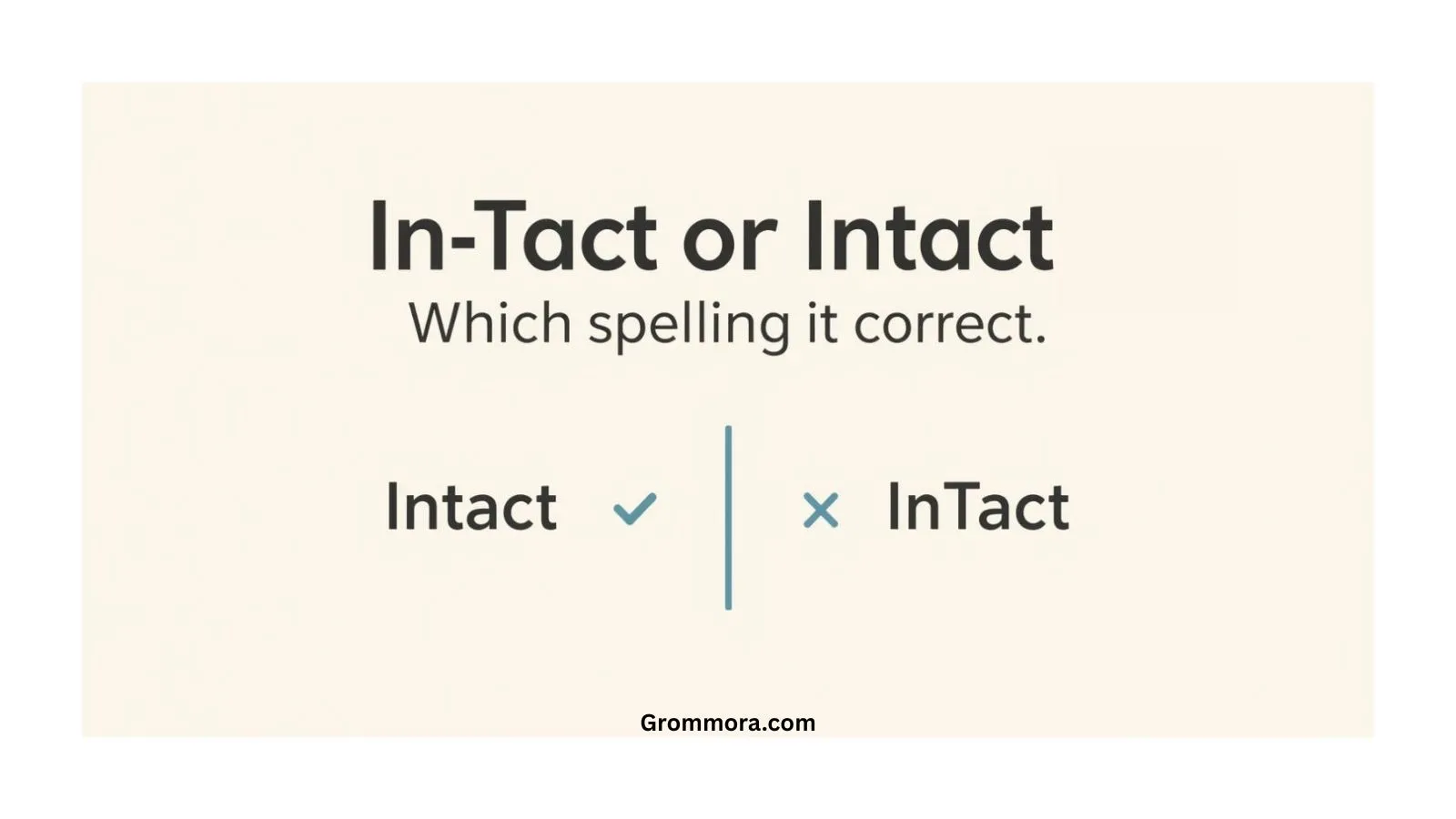
The correct spelling is “intact.”
“In tact” is incorrect and should not be used.
Intact means whole, complete, or not damaged.
Examples:
- The phone survived the fall and is still intact.
- The documents arrived intact.
- Her reputation remained intact after the investigation.
❌ In tact — not a valid English phrase.
The Origin of In Tact or Intact
The word intact comes from the Latin word intactus, meaning untouched or not harmed. It entered English in the early 1600s as a single word, not two.
The confusion happens because English has many phrases that start with “in” (like in time or in place). People naturally assume intact follows the same pattern. But it doesn’t.
There has never been a correct historical use of “in tact.” It is simply a spelling mistake that became common through repetition, autocorrect errors, and casual writing online.
British English vs American English Spelling
Here’s the good news:
Both British and American English use the same spelling — intact.
There are no regional differences for this word.
Comparison Table
| Version | Correct? | Used In |
|---|---|---|
| intact | ✅ Yes | US, UK, Australia, Canada |
| in tact | ❌ No | Incorrect everywhere |
Which Spelling Should You Use?
Always use intact, regardless of your audience.
- US audience: intact
- UK/Commonwealth audience: intact
- Global or SEO content: intact
There is no scenario—formal or informal—where “in tact” is acceptable.
Common Mistakes with In Tact or Intact
Here are the most frequent errors:
Wrong: Writing in tact because it “sounds right”
✅ Correct form: intact
❌ Assuming “tact” relates to politeness
✅ Intact has nothing to do with manners
❌ Using two words in formal writing
✅ Always one word: intact
In Tact or Intact in Everyday Examples
Emails:
- “All files are intact and attached.”
News:
- “The historic building remains intact after the storm.”
Social Media:
- “Dropped my phone, screen still intact 😅”
Formal Writing:
- “The agreement remained intact despite the dispute.”
In Tact or Intact – Google Trends & Usage Data
Search data shows that “in tact or intact” is queried most often in:
- The United States
- The United Kingdom
- India
- Pakistan
- Australia
Most searches come from:
- Students
- Content writers
- ESL learners
- Professionals checking spelling
The rise of online publishing has increased concern over small errors, making this keyword consistently popular.
Keyword Comparison Table
| Term | Correct | Meaning |
|---|---|---|
| intact | ✅ Yes | Whole, undamaged |
| in tact | ❌ No | Not a valid phrase |
FAQs
1. Is it still in tact or intact?
It is intact — “in tact” is incorrect.
2.What does being intact mean?
Being intact means whole, undamaged, or not altered.
3.What does it mean to be tact?
Tact means having sensitivity and skill in dealing with others.
4.What does “in tact” mean?
Nothing — “in tact” is a misspelling of intact.
5.What is another word for in tact?
Synonyms: whole, undamaged, unbroken, complete.
6.How can I use it in a sentence?
“The documents survived the flood intact.”
7.Is it correct to say John and I’s?
No, use John’s and my instead.
8.What are 10 examples of sentences?
- The vase stayed intact.
- His reputation remains intact.
- The files arrived intact.
- The building is intact after the storm.
- The package reached me intact.
- The car survived the crash intact.
- Her confidence remained intact.
- The agreement is still intact.
- The antique book is intact.
- All evidence was preserved intact.
9.What is a good start sentence?
“Have you ever wondered whether it’s in tact or intact?”
Conclusion
The confusion between in tact or intact is common, but the rule is simple: only “intact” is correct. It has always been one word, comes from Latin, and means whole or unharmed. The two-word version, “in tact,” is just a spelling error—no exceptions.
Both British and American English agree on this spelling, making it easy for global writers to stay consistent. Whether you’re writing an email, article, academic paper, or social media post, using intact keeps your writing professional and clear.
If you remember just one thing, let it be this:
👉 If something is whole, safe, or undamaged, it is intact—always one word.
Mastering small details like this improves credibility, boosts SEO quality, and builds confidence in your writing.