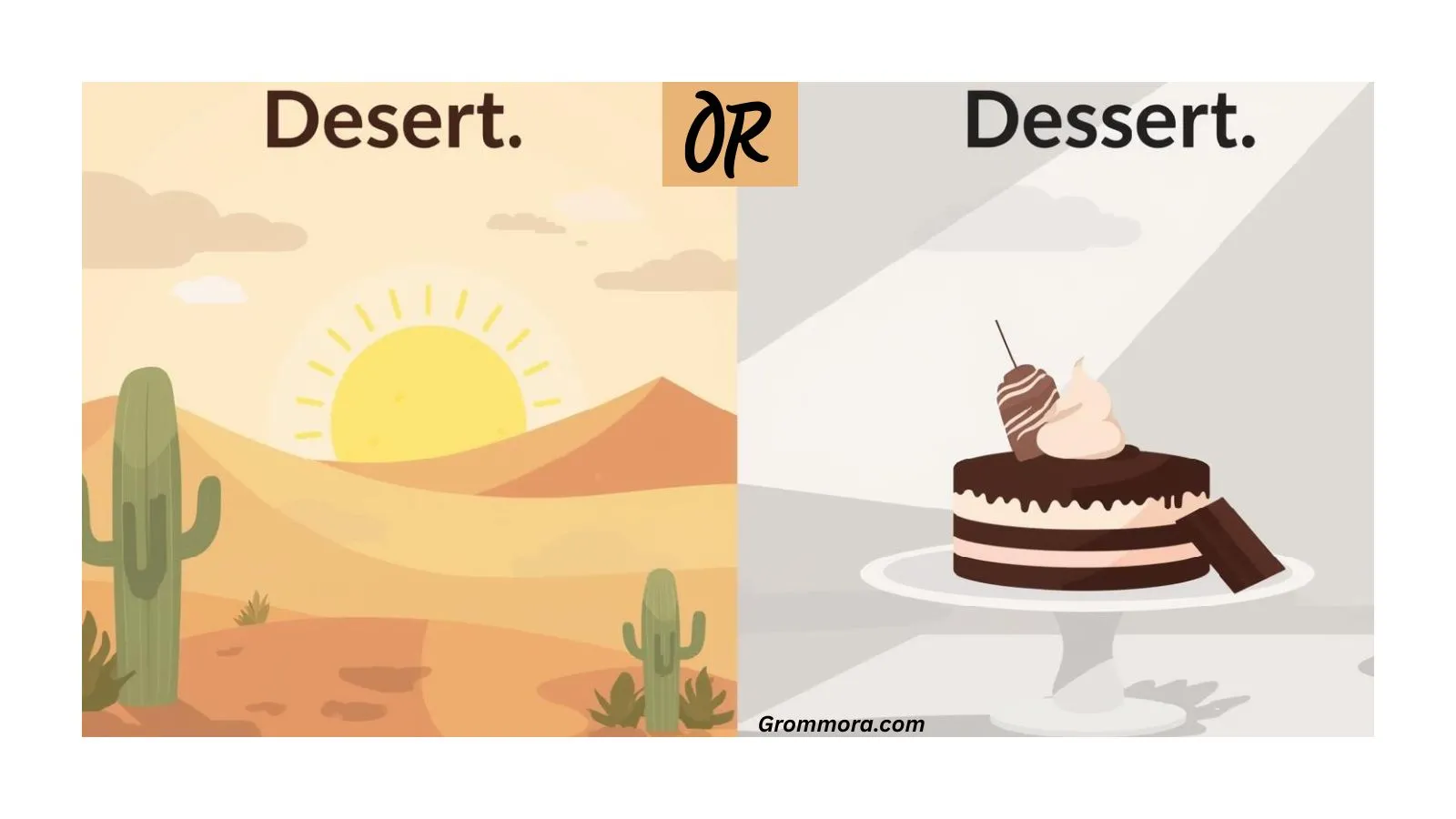
Have you ever paused while writing and wondered: Is it desert or dessert? You’re not alone. This is one of the most searched English language confusions because the words look almost identical but mean very different things. One refers to dry land, while the other is something sweet many people love.
People search for “desert or dessert” because a small spelling mistake can completely change meaning. Writing “I love desert after dinner” sounds funny—and wrong. This confusion shows up in emails, school assignments, blogs, social media captions, and even professional writing.
The problem comes from pronunciation, spelling, and memory tricks that don’t always stick. English learners and native speakers both struggle with it. This article solves that confusion once and for all. You’ll get a quick answer, history, spelling rules, examples, common mistakes, and practical advice on which word to use and when.
By the end, you’ll never mix up desert and dessert again—and you’ll know exactly why.
Desert vs Dessert – What’s the Difference?
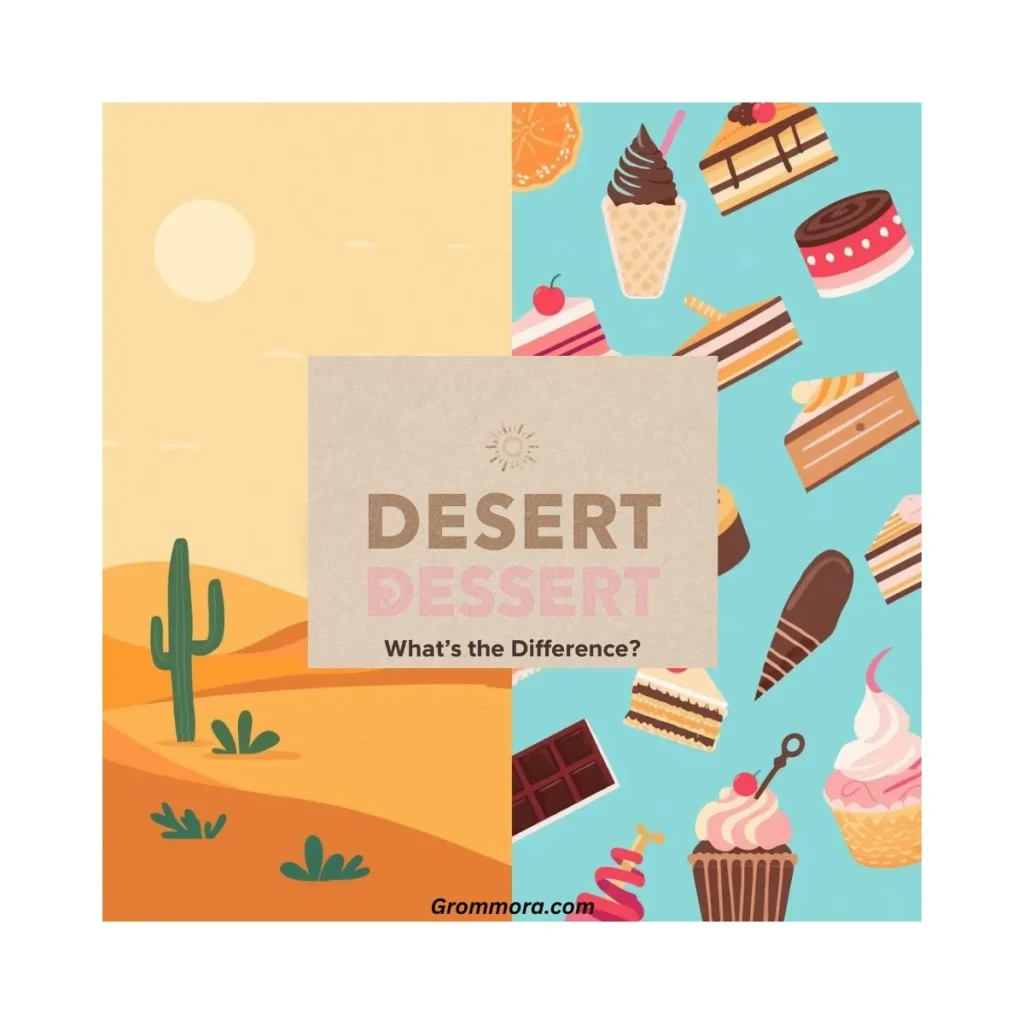
Desert and dessert are commonly confused words because they look and sound similar, but their meanings are very different. A desert is a dry, barren land or can mean to abandon someone, while dessert refers to a sweet dish eaten after a meal.
Are Desert and Dessert Homophones
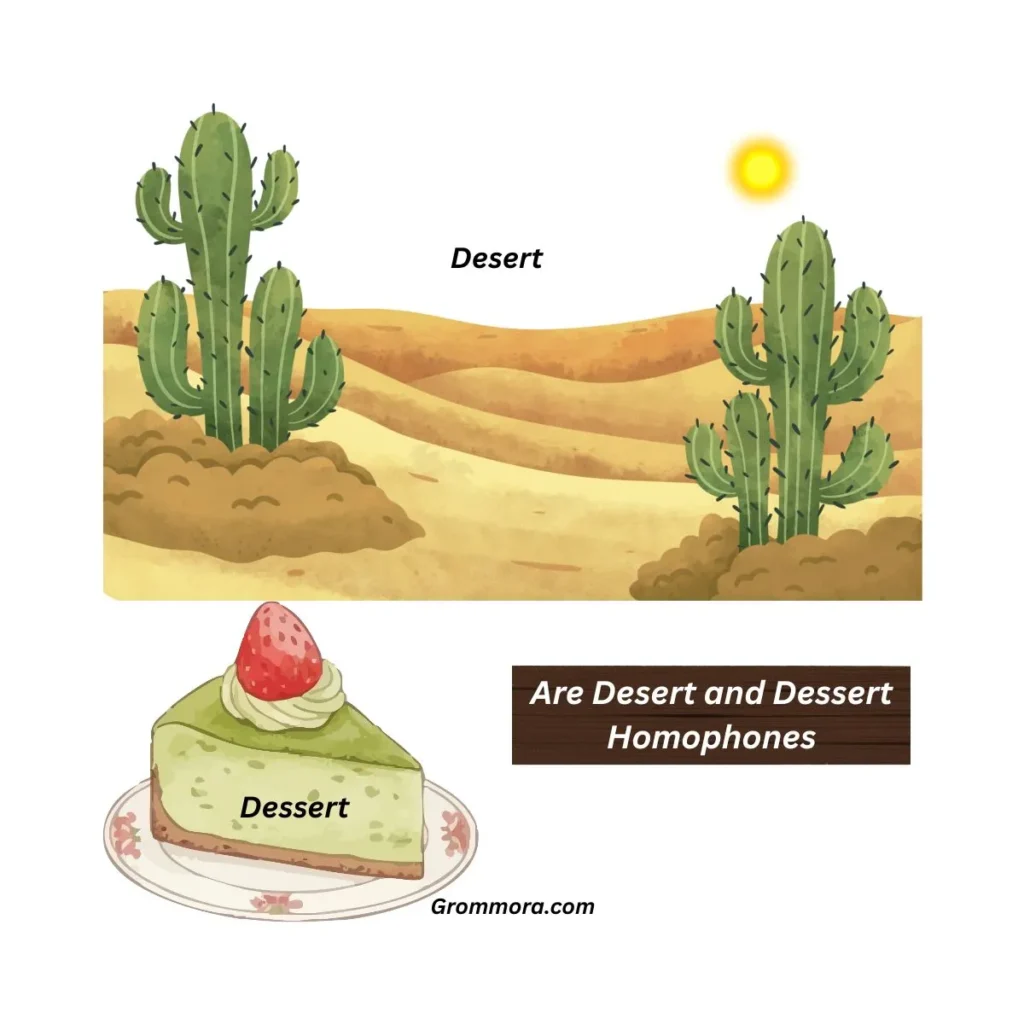
Desert and dessert are not perfect homophones, but they sound similar enough to confuse learners. Dessert and the verb form of desert sound almost the same in speech, which is why people often mix them up in writing, especially in casual conversations.
Desert or Dessert – Quick Answer
The word “desert” can refer to a dry, desolate area or to desert someone.
Dessert means a sweet food eaten after a meal.
Examples:
- Sahara is a desert.
- Cake is my favorite dessert.
Tip: Dessert has two “s” letters—just like you want seconds of sweets.
The Origin of Desert or Dessert
Both words come from Latin and French but evolved differently. Desert comes from the Latin desertum, meaning “abandoned place.” That explains why it refers to dry land or leaving someone.
Dessert comes from the French word desservir, meaning “to clear the table.” Over time, it became the sweet course served at the end of a meal. The extra “s” helps show the difference.
British English vs American English Spelling
Good news: both British and American English use the same spellings. The confusion is not regional—it’s global.
| Word | British English | American English | Meaning |
|---|---|---|---|
| Desert | Desert | Desert | Dry land / abandon |
| Dessert | Dessert | Dessert | Sweet food |
The rules are identical in both systems.
Which Spelling Should You Use?
Use desert when talking about land, climate, or abandonment.
Use dessert when talking about food.
- US audience: Same rule applies
- UK/Commonwealth: Same spelling
- Global writing: Focus on meaning, not location
Context matters more than country.
Common Mistakes with Desert or Dessert
Here are frequent errors people make:
- ❌ “Ice cream is my favorite desert”
✅ “Ice cream is my favorite dessert” - ❌ “They crossed a hot dessert”
✅ “They crossed a hot desert” - Mixing pronunciation while speaking
Always double-check the meaning before writing.
Desert or Dessert in Everyday Examples
- Email: “Let’s get dessert after dinner.”
- News: “The desert region faces drought.”
- Social Media: “Chocolate cake = best dessert ever!”
- Formal Writing: “Camels survive in desert climates.”
Real-life usage depends on tone and context.
Desert or Dessert – Google Trends & Usage Data
Search data shows “dessert” is more popular worldwide because food-related searches dominate. “Desert” spikes during geography, climate, or travel topics.
Countries with high confusion searches include the US, UK, India, and Pakistan—especially among students and ESL learners.
Comparison Table: Desert vs Dessert
| Feature | Desert | Dessert |
|---|---|---|
| Meaning | Dry land / abandon | Sweet food |
| Number of “s” | One | Two |
| Related to food | ❌ | ✅ |
| Common error | Used for sweets | Used for land |
FAQs
1.Is ice cream dessert or desert?
Ice cream is a dessert because it is a sweet food eaten after a meal.
2.Which is correct, dessert or desert?
Both are correct words, but dessert means sweet food, while desert means dry land or to abandon.
3.What is dessert food?
Dessert is a sweet course served at the end of a meal, such as cake, ice cream, or pudding.
4.How do you spell desert as in food?
Food-related spelling is dessert with two S’s.
5.How to remember dessert has two S?
Dessert has two S’s because you want more sugar—extra sweetness!
6.Why are sweets called desserts?
The word dessert comes from a French word meaning “to clear the table,” referring to the final sweet course.
7.Why does desert have two S’s?
It doesn’t—desert has one S when it means dry land; only dessert has two S’s.
8.Is it posher to say pudding or dessert?
In British English, “pudding” sounds more traditional or posh, while “dessert” is more formal and international.
9.Why is ice cream called desert?
It’s actually not correct—ice cream is called dessert, not desert. This is a common spelling mistake.
Conclusion
The confusion between desert or dessert is small but important. One extra letter can completely change what you mean. Desert refers to dry land or abandonment, while dessert is the sweet treat people enjoy after meals. The difference is not based on British or American English—it’s about meaning and usage.
If you remember one rule, remember this: dessert has two “s” because it’s sweet and you want more. Always pause and think about context before writing. This simple habit can prevent awkward mistakes in professional and casual writing.
Whether you’re writing an email, a blog post, or a caption, choosing the correct word builds clarity and confidence. Once you master this pair, you’ll notice how often it appears—and how easily you can avoid the error.